Ethanol → 4-(4-nitro-1,3-dioxo-1,3-dihydro-2H-isoindol-2-yl)benzoic acid
反応式

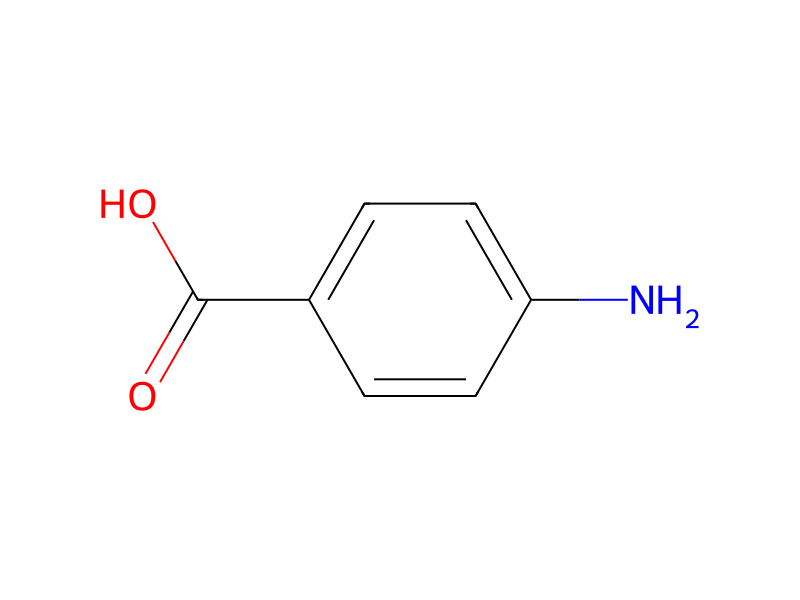
[N+:1]([C:4]1[CH:14]=[CH:13][CH:12]=[C:6]2[C:7]([O:9][C:10](=[O:11])[C:5]=12)=O)([O-:3])=[O:2].[NH2:15][C:16]1[CH:24]=[CH:23][C:19]([C:20]([OH:22])=[O:21])=[CH:18][CH:17]=1.C(O)C>C(O)(=O)C>[N+:1]([C:4]1[CH:14]=[CH:13][CH:12]=[C:6]2[C:7]([N:15]([C:16]3[CH:24]=[CH:23][C:19]([C:20]([OH:22])=[O:21])=[CH:18][CH:17]=3)[C:10](=[O:11])[C:5]=12)=[O:9])([O-:3])=[O:2]参加物
5




実験手順
The starting material used in the above example can be prepared as follows: 57.9 g (0.3 mol) of 3-nitrophthalic anhydride and 41.1 g (0.3 mol) of 4-aminobenzoic acid in 600 ml of acetic acid are refluxed for 6 hours and the mixture is then stirred into 1,000 ml of 50% aqueous ethanol. The yellow product which has precipitated is filtered off with suction, washed with water and dried at 80° C./30 mm Hg for 24 hours. 82 g (88% of theory) of 4-(3-nitrophthalimidyl)-benzoic acid are obtained; melting point >300° C. IR spectrum (KBr): 1790 and 1740 cm-1 (CO--N--CO); 1550 and 1370 cm-1 (NO2).