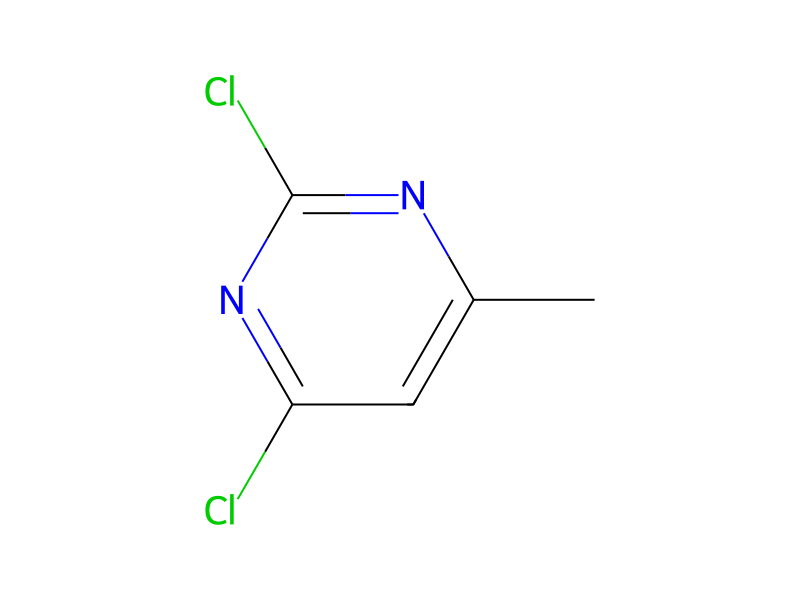
Diaminoquinoline 7 (72.0 g, 0.416 mol) and 2,4-dichloro-6-methylpyrimidine (8) (67.8 g, 0.416 mol) were suspended in ethylene glycol (1 L). Addition of 37% HCl (35 mL, 0.43 mol) resulted in a yellow solution which was heated to and held at 50° C. for 4.5 h. The mixture was diluted with chilled water (1 L) which resulted in a thick white paste-like precipitate and the mixture was filtered through Celite. The Celite and solid containing the product and bis-substituted by-product was slurried in water (4 L) and the Celite and insoluble by-product were removed by filtration. The filtrate pH was adjusted to 14 using 1N aqueous NaOH (1 L) resulting in precipitation of product which was removed by filtration. The damp product was transferred to a rotovap flask and dried in vacuo by azeotropic water removal with toluene (3×1.5 L). Product 9 was obtained as an off-white solid (33.4 g, 27% yield; Notebook reference A134-137). Another batch of 9 (7.4 g, 17% yield; Notebook reference A134-134) was similarly obtained by reaction of 7 (25.0 g, 0.144 mol) and recovery as above; MS [M+1]=300, 302; 13C NMR (DMSO) δ 167.51, 162.58, 159.22, 157.61, 151.05, 145.99, 133.17, 128.96, 125.39, 117.38, 114.23, 102.45, 102.26, 24.68, 23.19.