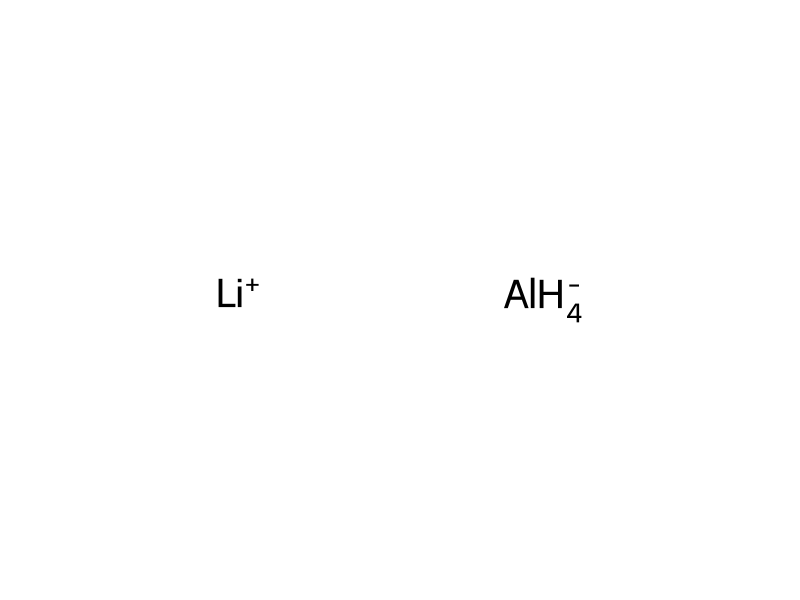
Lithium aluminum hydride → N-(7-(1-hydroxy-2-methylpropan-2-yloxy)isoquinolin-3-yl)cyclopropanecarboxamide
HRID 1502286
反応式

[CH:1]1([C:4]([NH:6][C:7]2[N:8]=[CH:9][C:10]3[C:15]([CH:16]=2)=[CH:14][CH:13]=[C:12]([O:17][C:18]([CH3:25])([CH3:24])[C:19](OCC)=[O:20])[CH:11]=3)=[O:5])[CH2:3][CH2:2]1.[AlH4-].[Li+]>O1CCCC1>[OH:20][CH2:19][C:18]([CH3:25])([O:17][C:12]1[CH:11]=[C:10]2[C:15]([CH:16]=[C:7]([NH:6][C:4]([CH:1]3[CH2:3][CH2:2]3)=[O:5])[N:8]=[CH:9]2)=[CH:14][CH:13]=1)[CH3:24]参加物
4



実験手順
To a solution of ethyl 2-(3-(cyclopropanecarboxamido)isoquinolin-7-yloxy)-2-methylpropanoate (63.4 mg, 0.185 mmol) in tetrahydrofuran (3 mL, 40 mmol) was added 1.0 M of lithium tetrahydroaluminate in tetrahydrofuran (0.20 mL). The reaction mixture was stirred at room temperature for 1 hour. The reaction was quenched by sequential addition of 9 μL water, then 9 μL 15% aq NaOH, then 26 μL water. The resulting mixture was stirred at room temperature for 15 minutes, then diluted with dichloromethane, dried with MgSO4, filtered through celite, and evaporated in vacuo. The crude product was purified via reverse phase HPLC and lyophilized to yield 4.8 mg (9%) of N-(7-(1-hydroxy-2-methylpropan-2-yloxy)isoquinolin-3-yl)cyclopropanecarboxamide. LCMS (ESI): RT (min)=3.414, M+H=301.1, method=E; 1H NMR (400 MHz, DMSO-d6) δ 10.77 (s, 1H), 9.03 (s, 1H), 8.38 (s, 1H), 7.76 (d, J=8.9 Hz, 1H), 7.61 (d, J=2.0 Hz, 1H), 7.39 (dd, J=8.9, 2.3 Hz, 1H), 4.93 (t, J=5.6 Hz, 1H), 3.45 (d, J=5.7 Hz, 2H), 3.27 (s, overlapping water non-integratable), 2.12-1.97 (m, 1H), 0.83 (dt, J=10.1, 5.4 Hz, 4H).