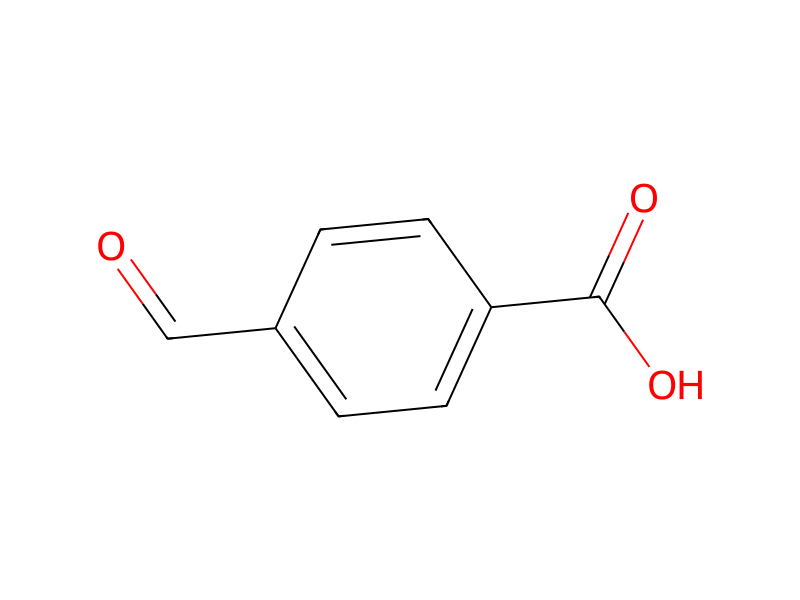
[C:1]([C:4]1[CH:11]=[CH:10][C:7]([CH:8]=[O:9])=[CH:6][CH:5]=1)([OH:3])=O.C(Cl)(=O)C(Cl)=O.[C:18]([NH:22][CH2:23][CH2:24][C:25]([O:27][C:28]([CH3:31])([CH3:30])[CH3:29])=[O:26])([CH3:21])([CH3:20])[CH3:19].C(N(CC)CC)C>ClCCl.CN(C)C=O>[C:18]([N:22]([CH2:23][CH2:24][C:25]([O:27][C:28]([CH3:31])([CH3:30])[CH3:29])=[O:26])[C:1](=[O:3])[C:4]1[CH:11]=[CH:10][C:7]([CH:8]=[O:9])=[CH:6][CH:5]=1)([CH3:21])([CH3:20])[CH3:19]N,N-dimethylformamide (25 μL) was added to a room temperature suspension of 4-carboxybenzaldehyde (2.0 g, 13 mmol) and oxalyl chloride (1.14 mL, 13.3 mmol) in dichloromethane (50 mL). The reaction was stirred at room temperature 30 minutes, then heated to reflux for 5 hours. The reaction mixture was concentrated. A solution of tert-butyl 3-(tert-butylamino)propanoate (2.68 g, 13.3 mmol) and triethylamine (1.9 mL, 13 mmol) in dichloromethane (50 mL) was added to the crude acid chloride. The mixture was stirred at room temperature overnight. The reaction was washed with water, then brine. The organic layer was dried over magnesium sulfate, filtered and concentrated to give tert-butyl 3-(N-tert-butyl-4-formylbenzamido)propanoate (4.47 g, 100%). 1H NMR (400 MHz, CDCl3, δ): 10.01 (s, 1H), 7.86-7.91 (m, 2H), 7.45-7.49 (m, 2H), 3.46-3.54 (m, 2H), 2.34-2.41 (m, 2H), 1.52 (s, 9H), 1.31 (s, 9H).