反応式
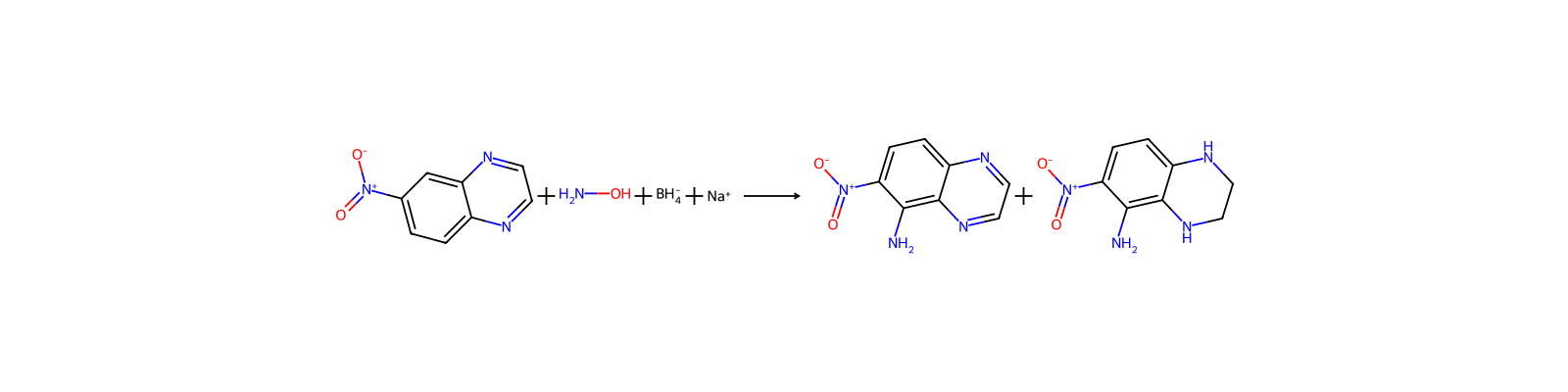
[N+:1]([C:4]1[CH:5]=[C:6]2[C:11](=[CH:12][CH:13]=1)[N:10]=[CH:9][CH:8]=[N:7]2)([O-:3])=[O:2].[NH2:14]O.[BH4-].[Na+]>>[NH2:14][C:5]1[C:4]([N+:1]([O-:3])=[O:2])=[CH:13][CH:12]=[C:11]2[C:6]=1[N:7]=[CH:8][CH:9]=[N:10]2.[NH2:14][C:5]1[C:4]([N+:1]([O-:3])=[O:2])=[CH:13][CH:12]=[C:11]2[C:6]=1[NH:7][CH2:8][CH2:9][NH:10]2参加物
5




実験手順
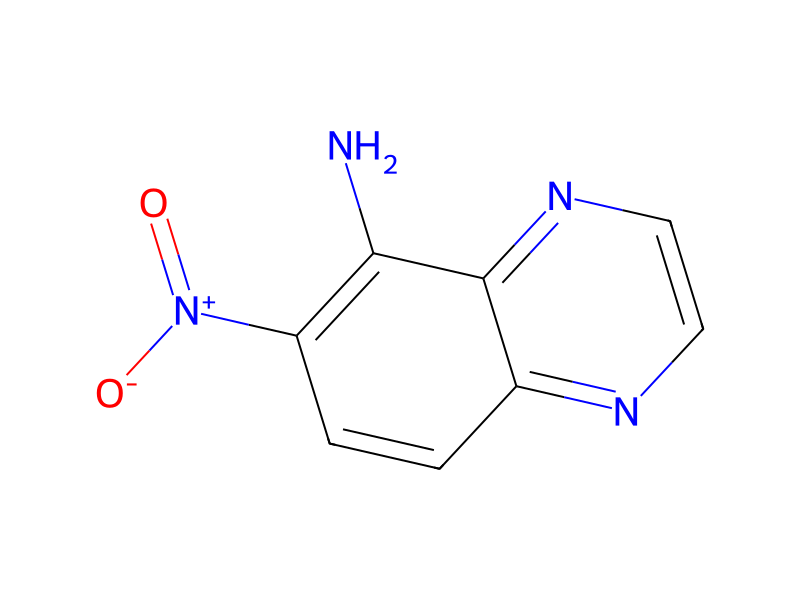
5-Amino-6-nitroquinoxaline was synthesized by reaction of 6-nitroquinoxaline with hydroxylamine in an alkaline medium in accordance with J. Chem. Soc., Perkin I, 1975, 1229. The product was reacted With sodium borohydride as in Example 1). The 1,2,3,4-tetrahydro-5-amino-6-nitroquinoxaline obtained in the form of brown crystals in a yield of 11.5% of the theoretical had a melting point of 213° C.
出典と根拠
- ORDレコード
- ord-9551f644420a47b4b7e3823ee6f9c5ee
- 出典データセット
- uspto-grants-1992_02
- 特許番号
- US05089025
関連ノート
読み込み中…