反応式

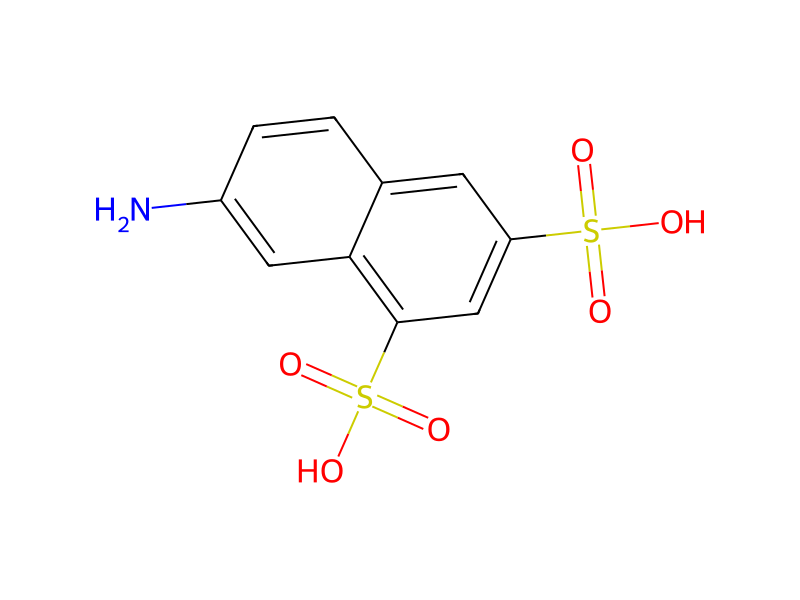
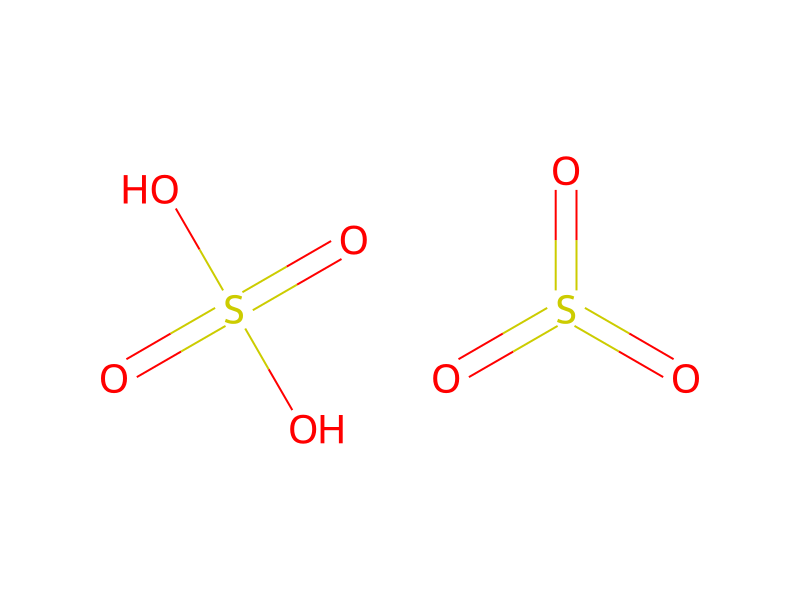
C1C2C(=CC=CC=2)C=CC=1N.[NH2:12][C:13]1[CH:22]=[CH:21][C:20]2[C:19]([S:23]([OH:26])(=[O:25])=[O:24])=[CH:18][C:17]([S:27]([OH:30])(=[O:29])=[O:28])=[CH:16][C:15]=2[C:14]=1S(O)(=O)=O.NC1C=CC2C(=C(S(O)(=O)=O)C=C(S(O)(=O)=O)C=2)C=1>OS(O)(=O)=O.O=S(=O)=O>[CH:22]1[C:13]([NH2:12])=[CH:14][C:15]2[C:20](=[C:19]([S:23]([OH:26])(=[O:25])=[O:24])[CH:18]=[C:17]([S:27]([OH:30])(=[O:28])=[O:29])[CH:16]=2)[CH:21]=1参加物


実験手順
When 2-naphthylamine (BNA) is sulfonated in oleum, the sulfonation products are principally 2-amino-1,5,7-naphthalene trisulfonic acid and 2-amino-6,8-naphthalenedisulfonic acid (Amino G Acid). Hydrolysis of the trisulfonic acid provides Amino J Acid (2-amino-5,7-naphthalenedisulfonic acid). Thus, using this so-called BNA route, it is possible to prepare a fixed ratio of both Amino J Acid and Amino G Acid. However, because of the known carcinogenicity of 2-naphthylamine, this route is not used. Amino J Acid is primarily made by the sulfonation of 2-amino-1-naphthalenesulfonic acid (Tobias Acid) with 30% oleum followed by hydrolysis of the intermediate 1,5,7-trisulfonic acid. Amino G Acid, on the other hand, is made by the sulfonation of beta naphthol with sulfuric acid and then with 20% oleum, in controlled steps from 15°-80°C., followed by amination by the Bucherer Reaction.
出典と根拠
- ORDレコード
- ord-a8178c7f227b4c0f92daf1ed550fdf38
- 出典データセット
- uspto-grants-1976_09
- 特許番号
- US03979445
関連ノート
読み込み中…