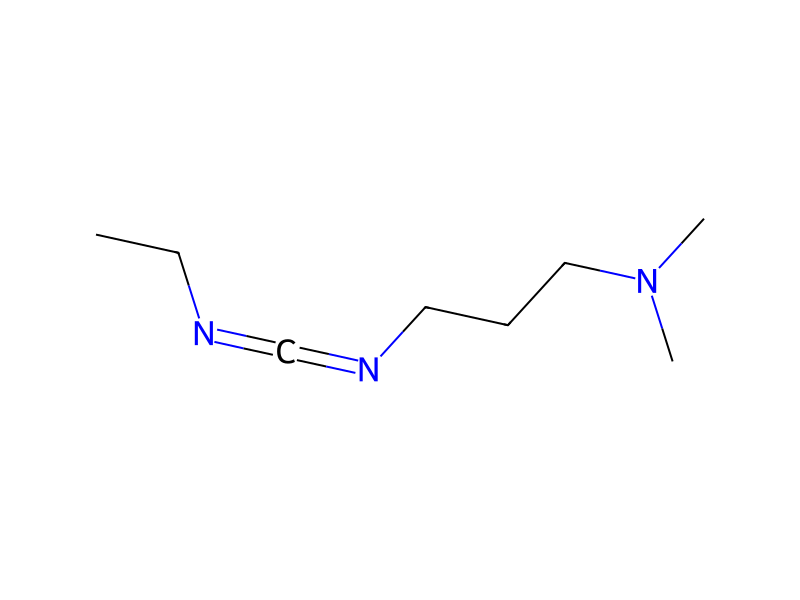
Cl.[N:2]1[C:6]2[CH2:7][CH2:8][CH:9]([C:11]([OH:13])=O)[CH2:10][C:5]=2[NH:4][CH:3]=1.[C:14]1([CH:20]2[C:28]3[C:23](=[CH:24][CH:25]=[CH:26][CH:27]=3)[NH:22][CH2:21]2)[CH:19]=[CH:18][CH:17]=[CH:16][CH:15]=1.C(N=C=NCCCN(C)C)C>CN(C)C=O>[C:14]1([CH:20]2[C:28]3[C:23](=[CH:24][CH:25]=[CH:26][CH:27]=3)[N:22]([C:11]([CH:9]3[CH2:8][CH2:7][C:6]4[N:2]=[CH:3][NH:4][C:5]=4[CH2:10]3)=[O:13])[CH2:21]2)[CH:15]=[CH:16][CH:17]=[CH:18][CH:19]=1A mixed solution of 518 mg of hydrochloride (racemic form) of 4,5,6,7-tetrahydrobenzimidazole-5-carboxylic acid, 500mg of (+)-3-phenylindoline, and 15 ml of dimethyl formamide was cooled to 0° C. The cooled solution and 736 mg of hydrochloride of N-ethyl-N'-(3-dimethylaminopropyl)carbodiimide added thereto were gradually heated to normal room temperature and stirred at the same temperature for 12 hours. The resultant reaction solution was concentrated under a reduced pressure. The residue of this concentration was neutralized by addition of an aqueous potassium carbonate solution and extracted with chloroform. The chloroform layer was dried over anhydrous magnesium sulfate and then distilled. The residue of this distillation was refined by silica gel column chromatography to obtain 725 mg of 5-(3-phenylindolin-1-ylcarbonyl)-4,5,6,7-tetrahydrobenzimidazole (82.5%) as an epimer mixture.