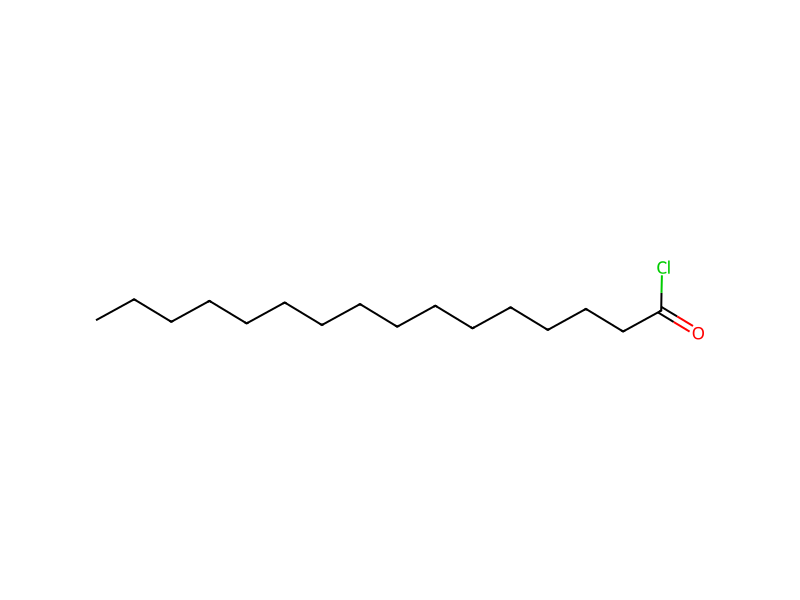
Palmitoyl chloride → 3-Hexadecanamidocyclohexanone
反応式

[NH2:1][CH:2]1[CH2:7][CH2:6][CH2:5][C:4](=[O:8])[CH2:3]1.[C:9](Cl)(=[O:25])[CH2:10][CH2:11][CH2:12][CH2:13][CH2:14][CH2:15][CH2:16][CH2:17][CH2:18][CH2:19][CH2:20][CH2:21][CH2:22][CH2:23][CH3:24]>>[C:9]([NH:1][CH:2]1[CH2:7][CH2:6][CH2:5][C:4](=[O:8])[CH2:3]1)(=[O:25])[CH2:10][CH2:11][CH2:12][CH2:13][CH2:14][CH2:15][CH2:16][CH2:17][CH2:18][CH2:19][CH2:20][CH2:21][CH2:22][CH2:23][CH3:24]参加物
3


実験手順
2-Cyclohexenone is reacted with benzylamine to give 3-benzylaminocyclohexanone. Hydrogenolysis of the benzylamino group then gives 3-aminocyclohexanone. Reaction with hexadecanoyl chloride affords 3-hexadecanamidocyclohexanone, which is then reduced with sodium borohydride to produce a cis/trans mixture of 3-hexadecanamidocyclohexanol. Separation by column chromatography then gives the pure isomers. Reaction with bromoethylphosphodichloridate, then with trimethylamine will produce 3-hexadecanamido-cyclohexylphosphocholine.
出典と根拠
- ORDレコード
- ord-34486c3e38074f4d85f96fbe6405a9e7
- 出典データセット
- uspto-grants-2007_11
- 特許番号
- US07294619B2
反応ノート
読み込み中…