ホームMCPワークベンチSkills
ホームワークベンチ通知マイページ
llms.txt · MCPガイドプライバシーポリシー · 利用規約 · サポートv1.8.0
  1. ホーム
  2. /化合物

パルミトイルクロリド

Palmitoyl chloride

HCID 8206
ノートを作成反応を作成見積依頼を出す
印刷プレビュー

データを補完しています。しばらくしてからページを更新すると最新の内容を表示できます
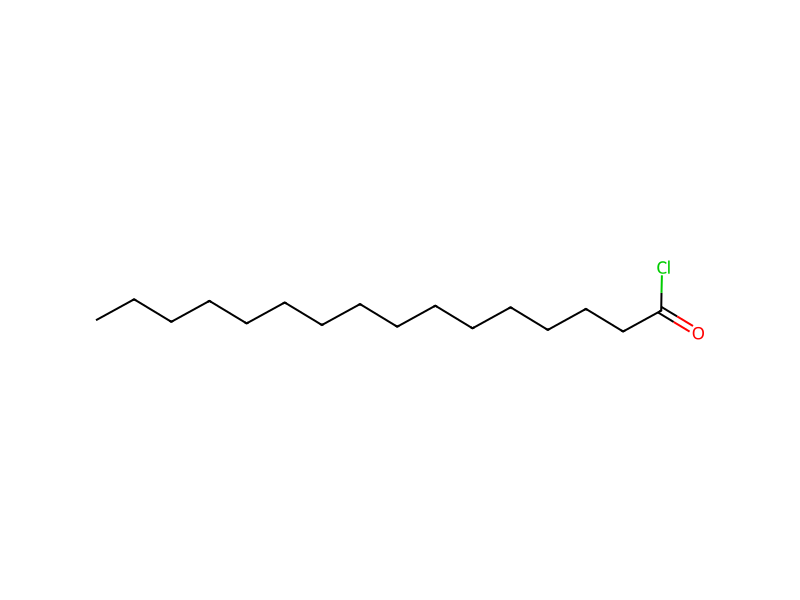
基本情報名称と識別子物性安全と法規制化学と産業関連反応化合物ノート
部分構造検索類似構造を探す

基本情報

CAS
112-67-4
標準SMILES
CCCCCCCCCCCCCCCC(=O)Cl
InChIKey
ARBOVOVUTSQWSS-UHFFFAOYSA-N
分子式
C16H31ClO
平均分子量
274.9 g/mol
単同位体質量
274.2063433

名称と識別子

優先名称
Palmitoyl chloride
IUPAC
hexadecanoyl chloride
現地名
パルミトイルクロリド
英語名
Palmitoyl chloride
分子式
C16H31ClO
分子量
274.87

名称と別名

Palmitoyl chlorideHEXADECANOYL CHLORIDE112-67-4Palmitic acid chlorideHexadecanoic acid, chloride7642R2JOSBNSC-9854DTXSID4051582RefChem:169735DTXCID8030134203-996-7Palmityl chloride
名称をさらに表示
パルミトイルクロリドヘキサデカノイルクロリドパルミチン酸クロリドヘキサデカン酸クロリドパルミチン酸クロライド塩化N-ヘキサデカノイル塩化パルミトイル塩化パルミトイル, 98%N-HEXADECANOYL CHLORIDEmitoyLPalmitoylchloridCETYLOYL CHLORIDEPalmitoyl choridePALNITOYL CHLORIDEPalmitoylChloride>
Hexadecanoyl-chloride-MFCD00000742palmitoylchloridehexadecanoic acid chlorideC16H31ClOUNII-7642R2JOSBPalmitic chlorideHSDB 5573

データベース識別子

CAS
112-67-4
PubChem CID
8206
DTXSID
DTXSID4051582
UNII
7642R2JOSB
EC Number
203-996-7
Nikkaji
J110.173K

物性

構造計算による物性補完中

XLogP
7.3
極性表面積
17.1 Ų
水素結合供与体数
0
水素結合受容体数
1
回転可能結合数
14
重原子数
18
形式電荷
0
複雑度
180

実験および物理化学的性質

Color/FormCOLORLESS LIQUID
SolubilityVERY SOL IN ETHER
Boiling Point · 2 件

199 °C @ 20 MM HG

BOILING POINT: 194.5 °C AT 17 MM HG

Melting Point11-12 °C
Refractive IndexINDEX OF REFRACTION: 1.4514 @ 20 °C/D
Physical Description · 2 件

Hexadecanoyl chloride appears as a clear colorless to light yellow liquid with a pungent odor. Freezing point 11-12 °C. Irritates skin, eyes, and mucous membranes. May be toxic by ingestion, inhalation and skin absorption.

Clear colorless to light yellow liquid; mp = 11-12 deg C; [CAMEO] Clear colorless liquid; mp = 11-13 deg C; [MSDSonline]

Other Experimental PropertiesDECOMPOSES IN WATER, ALCOHOL

物理化学的性質

融点
11 · 11-13 °C (lit.)
沸点
88 · 88-90 °C/0.2 mmHg (lit.)

安全と法規制

安全情報は参考情報です。供給元の安全データシート(SDS)、適用法令、専門家による評価に代わるものではありません。

GHS分類

GHS Classification · 6 件

This chemical does not meet GHS hazard criteria for 0.5% (1 of 201) of reports.

Danger

H290 (21.4%): May be corrosive to metals [Warning Corrosive to Metals];H312 (52.7%): Harmful in contact with skin [Warning Acute toxicity, dermal];H314 (25.4%): Causes severe skin burns and eye damage [Danger Skin corrosion/irritation];H315 (74.1%): Causes skin irritation [Warning Skin corrosion/irritation];H317 (74.1%): May cause an allergic skin reaction [Warning Sensitization, Skin]

P234, P260, P261, P264, P272, P280, P301+P330+P331, P302+P352, P302+P361+P354, P304+P340, P305+P354+P338, P316, P317, P321, P332+P317, P333+P317, P362+P364, P363, P390, P405, P406, and P501 (click each P-code to see the statement)

Aggregated GHS information provided per 201 reports by companies from 17 notifications to the ECHA C&L Inventory. Each notification may be associated with multiple companies.;Reported as not meeting GHS hazard criteria per 1 of 201 reports by companies.;There are 16 notifications provided by 200 of 201 reports by companies with hazard statement code(s).;Information may vary between notifications depending on impurities, additives, and other factors. The percentage value in parenthesis indicates the notified classification ratio from companies that provide hazard codes. Only hazard codes with percentage values above 10% are shown. For more detailed information, please visit ECHA C&L website.

危険有害性情報

Regulatory Information · 3 件

Chemical: Hexadecanoyl chloride

Status: Active Update: 23-05-2022 https://echa.europa.eu/registration-dossier/-/registered-dossier/32158

Palmitoyl chloride: Does not have an individual approval but may be used under an appropriate group standard

Other Safety InformationIMAP assessments - Hexadecanoyl chloride: Human health tier I assessment;IMAP assessments - Hexadecanoyl chloride: Environment tier I assessment
DOT LabelCorrosive

化学と産業

用途と製造

General Manufacturing InformationHexadecanoyl chloride: ACTIVE

応用分野

使用Palmitoyl Chloride was used as a polymeric carriers for plasmid DNA (pDNA) delivery to 293T cells.

一般的な説明A clear colorless to light yellow liquid with a pungent odor. Freezing point 11-12°C. Irritates skin, eyes, and mucous membranes. May be toxic by ingestion, inhalation and skin absorption.

上流・下流製品情報

上流原料

パルミチン酸

下流製品

ヘキサデカン酸(2R,3R)-2-(ジクロロアセチルアミノ)-3-ヒドロキシ-3-(4-ニトロフェニル)プロピル6-O-パルミトイル-L-アスコルビン酸1-ヘキサデカノールヘキサデカン酸2-ヒドロキシエチルN,N'-エチレンビスパルミトアミドパルミチン酸グリシジル

関連反応

250 件
反応記録を作成
HRID 4492 の反応式
HRID 4492反応物としてuspto-grants-1988_02
HRID 5127 の反応式
HRID 5127反応物としてuspto-grants-1993_09
HRID 6095 の反応式
HRID 6095反応物としてuspto-grants-1993_09
HRID 19748 の反応式
HRID 19748反応物としてuspto-grants-2010_06
HRID 32377 の反応式
HRID 32377反応物としてuspto-grants-2008_09
HRID 34304 の反応式
HRID 34304反応物としてuspto-grants-1988_08
HRID 90193 の反応式
HRID 90193反応物としてTraining data from https://doi.org/10.1039/C8SC04228D (2/10)
HRID 92745 の反応式
HRID 92745反応物としてTraining data from https://doi.org/10.1039/C8SC04228D (2/10)
1 / 32 ページ

化合物ノート

読み込み中…

このページの内容基本情報名称と識別子物性安全と法規制化学と産業関連反応化合物ノート
その他の操作
ノートを作成反応を作成見積依頼を出す
比重(密度)
0.906 g/mL · 0.906 g/mL at 25 °C (lit.)
屈折率
20 · n20/D 1.452(lit.)
闪点
230 °F · >230 °F
貯蔵温度
30 °C · Store below +30°C.
溶解性
クロロホルム(少量)、酢酸エチル(少量)
外見
液体
比重
0.905 · 0.905
色
クリア
水溶解度
分解
BRN
972409 · 972409
安定性
湿気に敏感
InChI
1S/C16H31ClO/c1-2-3-4-5-6-7-8-9-10-11-12-13-14-15-16(17)18/h2-15H2,1H3
InChIKey
ARBOVOVUTSQWSS-UHFFFAOYSA-N
SMILES
CCCCCCCCCCCCCCCC(Cl)=O
CAS データベース
112 · 112-67-4(CAS DataBase Reference)
NISTの化学物質情報
Palmitoyl chloride(112-67-4)
EPAの化学物質情報
Hexadecanoyl chloride (112-67-4)

化学的性質

化学的特性clear liquid

Fire Hazards · 1 件

Excerpt from ERG Guide 154 [Substances - Toxic and/or Corrosive (Non-Combustible)]:;Non-combustible, substance itself does not burn but may decompose upon heating to produce corrosive and/or toxic fumes. Some are oxidizers and may ignite combustibles (wood, paper, oil, clothing, etc.). Corrosives in contact with metals may evolve flammable hydrogen gas. Containers may explode when heated. For electric vehicles or equipment, ERG Guide 147 (lithium ion or sodium ion batteries) or ERG Guide 138 (sodium batteries) should also be consulted. (ERG, 2024)

Health Hazards · 1 件

Excerpt from ERG Guide 154 [Substances - Toxic and/or Corrosive (Non-Combustible)]:;TOXIC and/or CORROSIVE; inhalation, ingestion or skin contact with material may cause severe injury or death. Contact with molten substance may cause severe burns to skin and eyes. Avoid any skin contact. Fire may produce irritating, corrosive and/or toxic gases. Runoff from fire control or dilution water may be corrosive and/or toxic and cause environmental contamination. (ERG, 2024)

Hazards Summary · 1 件

Slowly decomposed by water forming hydrochloric and palmitic acids; A skin, eye, and mucous membrane irritant; [CAMEO] Corrosive to skin and eyes; [eChemPortal: ERMA] Reacts violently with water; A corrosive substance that can cause injury to the skin, eyes, and respiratory tract; A lachrymator; Inhalation may cause chemical pneumonitis; [MSDSonline]

Reactive GroupAcyl Halides, Sulfonyl Halides, and Chloroformates
Reactivity Profile · 1 件

HEXADECANOYL CHLORIDE is incompatible with bases (including amines), with strong oxidizing agents, and with alcohols. May react vigorously or explosively if mixed with diisopropyl ether or other ethers in the presence of trace amounts of metal salts [J. Haz. Mat., 1981, 4, 291].

Air and Water ReactionsDecomposes rather slowly in water to form hydrochloric acid and palmitic acid, a fatty acid that is not soluble in water.
Hazard Classes and CategoriesMet. Corr. 1 (21.4%);Acute Tox. 4 (52.7%);Skin Corr. 1 (25.4%);Skin Irrit. 2 (74.1%);Skin Sens. 1 (74.1%)

安全と保護具

Fire Fighting · 1 件

Excerpt from ERG Guide 154 [Substances - Toxic and/or Corrosive (Non-Combustible)]:;SMALL FIRE: Dry chemical, CO2 or water spray.;LARGE FIRE: Dry chemical, CO2, alcohol-resistant foam or water spray. If it can be done safely, move undamaged containers away from the area around the fire. Dike runoff from fire control for later disposal.;FIRE INVOLVING TANKS, RAIL TANK CARS OR HIGHWAY TANKS: Fight fire from maximum distance or use unmanned master stream devices or monitor nozzles. Do not get water inside containers. Cool containers with flooding quantities of water until well after fire is out. Withdraw immediately in case of rising sound from venting safety devices or discoloration of tank. ALWAYS stay away from tanks in direct contact with flames. (ERG, 2024)

First Aid · 1 件

Excerpt from ERG Guide 154 [Substances - Toxic and/or Corrosive (Non-Combustible)]:;Refer to the "General First Aid" section. Specific First Aid: For corrosives, in case of contact, immediately flush skin or eyes with running water for at least 30 minutes. Additional flushing may be required. (ERG, 2024)

Nonfire Spill Response · 1 件

Excerpt from ERG Guide 154 [Substances - Toxic and/or Corrosive (Non-Combustible)]:;ELIMINATE all ignition sources (no smoking, flares, sparks or flames) from immediate area. Do not touch damaged containers or spilled material unless wearing appropriate protective clothing. Stop leak if you can do it without risk. Prevent entry into waterways, sewers, basements or confined areas. Absorb or cover with dry earth, sand or other non-combustible material and transfer to containers. DO NOT GET WATER INSIDE CONTAINERS. (ERG, 2024)

Isolation and Evacuation · 1 件

Excerpt from ERG Guide 154 [Substances - Toxic and/or Corrosive (Non-Combustible)]:;IMMEDIATE PRECAUTIONARY MEASURE: Isolate spill or leak area in all directions for at least 50 meters (150 feet) for liquids and at least 25 meters (75 feet) for solids.;SPILL: Increase the immediate precautionary measure distance, in the downwind direction, as necessary.;FIRE: If tank, rail tank car or highway tank is involved in a fire, ISOLATE for 800 meters (1/2 mile) in all directions; also, consider initial evacuation for 800 meters (1/2 mile) in all directions. (ERG, 2024)

Personal Protective Equipment (PPE) · 1 件

Excerpt from ERG Guide 154 [Substances - Toxic and/or Corrosive (Non-Combustible)]:;Wear positive pressure self-contained breathing apparatus (SCBA). Wear chemical protective clothing that is specifically recommended by the manufacturer when there is NO RISK OF FIRE. Structural firefighters' protective clothing provides thermal protection but only limited chemical protection. (ERG, 2024)

毒性情報

Adverse EffectsDermatotoxin - Skin burns.;Lacrimator (Lachrymator) - A substance that irritates the eyes and induces the flow of tears.;Toxic Pneumonitis - Inflammation of the lungs induced by inhalation of metal fumes or toxic gases and vapors.

法規制情報

Regulatory Information · 3 件

Chemical: Hexadecanoyl chloride

Status: Active Update: 23-05-2022 https://echa.europa.eu/registration-dossier/-/registered-dossier/32158

Palmitoyl chloride: Does not have an individual approval but may be used under an appropriate group standard

安全データ

F
9-21
wgk
1
tsca
TSCA listed
ridadr
UN 3265 8/PG 2
毒性
LD50 orally in Rabbit: > 2000 mg/kg
hs_code
2915 90 70
risk_code
14-34-29
化審法
(2)-632
消防法
危-4-3-III
hazard_code
C
safety_code
26-36/37/39-43-45-8
hazard_class
8
packing_group
II
Hazard Classifications
Skin Corr. 1B
ストレージクラス
8A - Combustible corrosive hazardous materials
有毒物質データの
112-67-4(Hazardous Substances Data)
2(3H)-フラノン
4-ヘキサデシルアニリン
パルミチン酸プロピル
パルミチン酸 コレステロール
パルミチン酸オクチル
トリコサン酸
エストラ-1,3,5(10)-トリエン-3,17β-ジオール17-ヘキサデカノアート