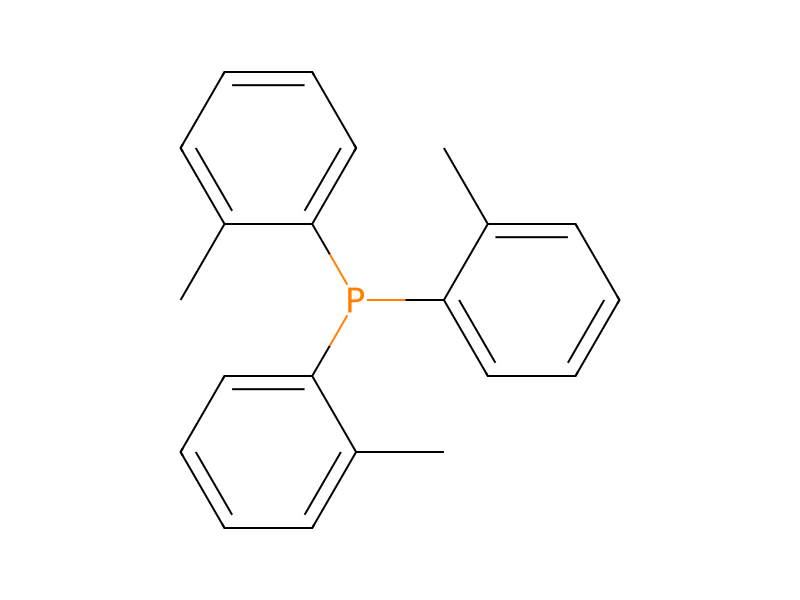
A mixture of 4-bromo-2-methyl-1H-indole (containing 25% of the 6-bromo isomer) (8.30 g), palladium (II) acetate (0.45 g), tri-o-tolylphosphine (1.22 g), benzyl acrylate (9.76 g) and triethylamine (8.36 ml) in acetonitrile (8 ml) was heated in an oil bath at 140° C. under an atmosphere of nitrogen for 2 hours. The mixture was cooled and partitionedbetween dichloromethane and water. The organic layer was separated, washed three times with water and dried (MgSO4). Evaporation of the solvent gave an oil which was chromatographed on silica gel. Elution with dichloromethane/hexane (1:1) first gave impurity followed by pure product.The product fractions were evaporated and the residue was triturated with ether to give the title compound (6.60 g), m.p. 135°-136° C.Found: C,77.98; H,6.10; N,4.71. C19H17NO2 requires: C,78.33; H,5.88; N,4.81%. Further elution with dichloromethane/hexane (4:1) gave benzyl (E)-3-(2-methyl-1H-indol-6-yl)-2-propenoate (2.0 g), m.p. 164°-165° C. Found: C,78.53; H,6.06; N,4.74. C19 H17NO2 requires: C,78.33; H,5.88; N,4.81%.