反応式

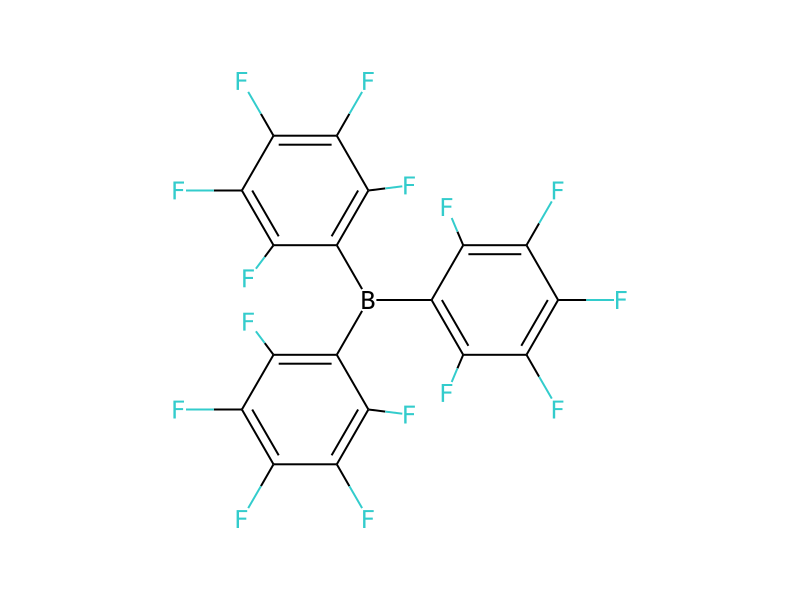
FC1C(B(C2C(F)=C(F)C(F)=C(F)C=2F)C2C(F)=C(F)C(F)=C(F)C=2F)=C(F)C(F)=C(F)C=1F.[CH2:35]=[CH:36][C:37]1[CH:42]=[CH:41][CH:40]=[CH:39][CH:38]=1>C1(C)C=CC=CC=1.C1(C([Ti]C([Si](C)(C)C)(C2C=CC=CC=2)C2C=CC=CC=2)(C2C=CC=CC=2)[Si](C)(C)C)C=CC=CC=1>[CH2:35]=[CH:36][C:37]1[CH:42]=[CH:41][CH:40]=[CH:39][CH:38]=1.[CH:36]([CH:37]1[CH2:42][CH2:41][CH2:40][CH2:39][CH2:38]1)=[CH2:35].[CH:36]([CH:37]1[CH2:42][CH2:41][CH:40]=[CH:39][CH2:38]1)=[CH2:35]参加物
7




実験手順
The polymerization conditions of Example 5 were substantially repeated using the bis(diphenyltrimethylsilylmethyl)titanium (II) complex (0.01 M in toluene), and MAO (1.6 M in toluene), dimethylanilinium tetrakispentafluorophenylborate (DMATB) (0.002 M in toluene), or tris(pentafluorophenyl)borane (borane) (0.01 M in toluene) cocatalyst. Styrene monomer, vinylcyclohexane (VCH) or 4-vinylcyclohexene (4-VCH) were polymerized. The resulting styrene polymers possessed crystalline melting points in excess of 260° C., indicating that the polymers were syndiotactic. Molar ratios of reactants and results are contained in Table IV.
後処理
- customThe polymerization conditions of Example 5
- customexcess of 260° C.
- customMolar ratios of reactants and results
出典と根拠
- ORDレコード
- ord-f7a75b960f824b36913ca194edcda800
- 出典データセット
- uspto-grants-1999_11
- 特許番号
- US05990033
関連ノート
読み込み中…