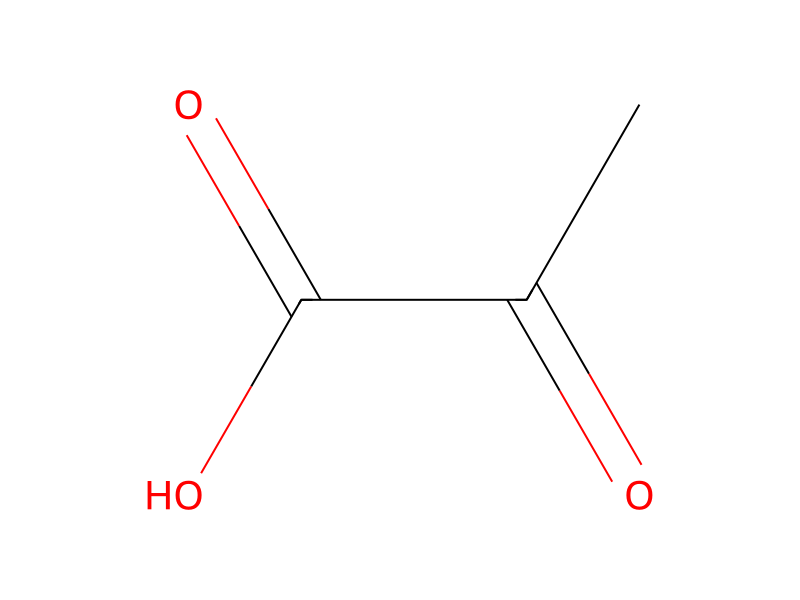
[C:1]([OH:6])(=O)[C:2]([CH3:4])=[O:3].[NH:7]1[CH2:16][C:15]2[C:10](=[CH:11][CH:12]=[CH:13][CH:14]=2)[CH2:9][C@H:8]1[C:17]([O:19][C:20]([CH3:23])([CH3:22])[CH3:21])=[O:18].C1(N=C=NC2CCCCC2)CCCCC1>C(Cl)(Cl)Cl>[C:20]([O:19][C:17]([CH:8]1[CH2:9][C:10]2[C:15](=[CH:14][CH:13]=[CH:12][CH:11]=2)[CH2:16][N:7]1[C:1](=[O:6])[C:2](=[O:3])[CH3:4])=[O:18])([CH3:23])([CH3:21])[CH3:22]A cooled and freshly distilled solution of 270 mg of pyruvic acid in 5 ml of chloroform is rapidly stirred into a solution of 700 mg of Tic-OBut and 630 mg of dicyclohexylcarbodiimide in 15 ml of anhydrous chloroform, the latter solution having been cooled to -50° C. The mixture is left for 16 hours in a deep-freezing cabinet (-20° C.), and the precipitated dicyclohexylurea is filtered off. The solution is washed with KHSO4 solution and then with KHCO3 solution, dried over Na2SO4, and concentrated in vacuo. The compound (oil) contains a little dicyclohexylurea, and was analyzed by chromatography over silica gel in the system CHCl3 /CH3OH 15:1.