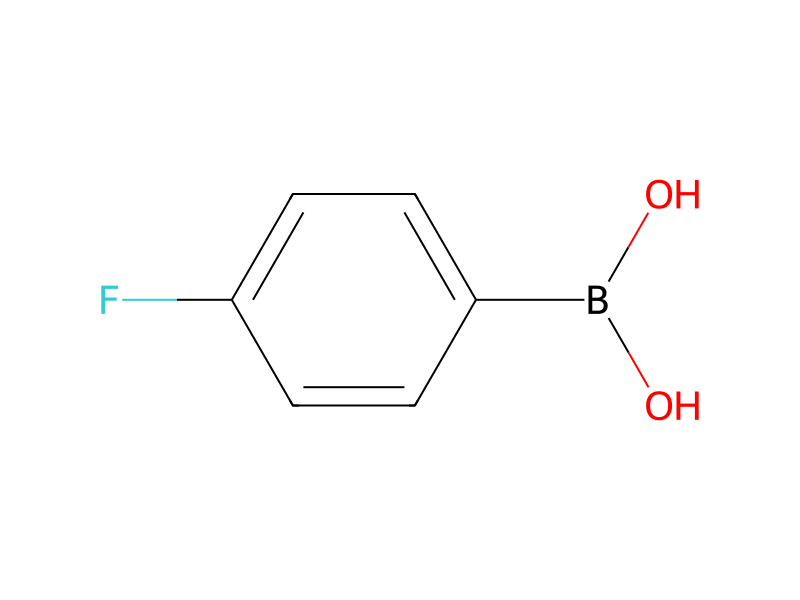
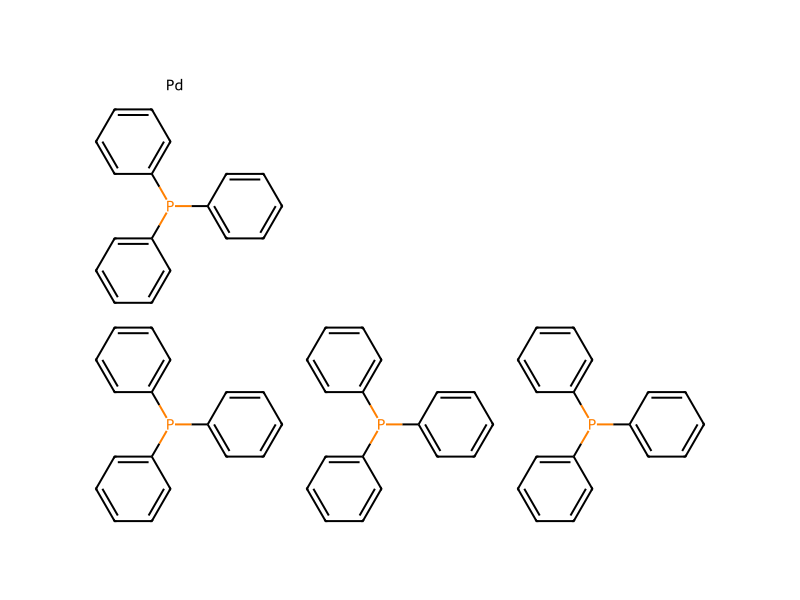
[F:1][C:2]1[CH:7]=[CH:6][C:5](B(O)O)=[CH:4][CH:3]=1.Br[C:12]1[CH:17]=[CH:16][C:15]([OH:18])=[CH:14][C:13]=1[Cl:19].O.C(=O)([O-])[O-].[Cs+].[Cs+]>O1CCOCC1.[Pd].C1(P(C2C=CC=CC=2)C2C=CC=CC=2)C=CC=CC=1.C1(P(C2C=CC=CC=2)C2C=CC=CC=2)C=CC=CC=1.C1(P(C2C=CC=CC=2)C2C=CC=CC=2)C=CC=CC=1.C1(P(C2C=CC=CC=2)C2C=CC=CC=2)C=CC=CC=1>[Cl:19][C:13]1[CH:14]=[C:15]([OH:18])[CH:16]=[CH:17][C:12]=1[C:5]1[CH:6]=[CH:7][C:2]([F:1])=[CH:3][CH:4]=14-Fluorobenzeneboronic acid (405 mg, 2.89 mmol) and 4-bromo-3-chlorophenol (500 mg, 2.41 mmol) were dissolved in dioxane (15 mL) and water (3 mL) under nitrogen. The solution was degassed before tetrakis(triphenylphosphine) palladium (0) (278 mg, 0.24 mmol) was added followed by caesium carbonate (2.36 g, 7.23 mmol) and the reaction was stirred at 80° C. for 18 hours. The cooled reaction mixture was partitioned between ethyl acetate and water. The aqueous layer was separated and extracted with ethyl acetate. The combined organic extracts were washed with brine, dried over MgSO4, filtered and concentrated in vacuo. The residue was purified by silica gel column chromatography (20% ethyl acetate in heptane) to afford the title compound (503 mg, 94%) as a tan oil which solidified on standing.