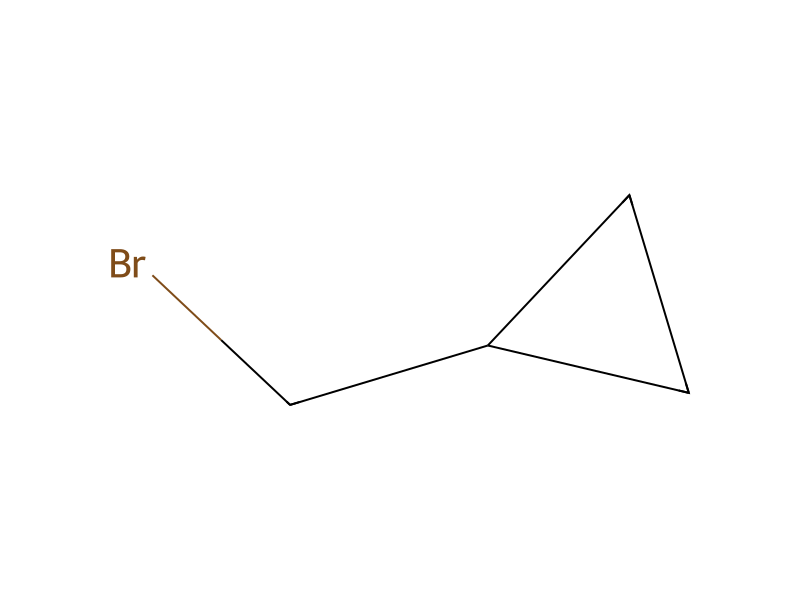
[Cl:1][C:2]1[C:11]([CH:12]=[O:13])=[CH:10][C:9]2[C:4](=[CH:5][CH:6]=[C:7]([OH:14])[CH:8]=2)[N:3]=1.C(=O)([O-])[O-].[Cs+].[Cs+].Br[CH2:22][CH:23]1[CH2:25][CH2:24]1>CN(C=O)C>[Cl:1][C:2]1[C:11]([CH:12]=[O:13])=[CH:10][C:9]2[C:4](=[CH:5][CH:6]=[C:7]([O:14][CH2:22][CH:23]3[CH2:25][CH2:24]3)[CH:8]=2)[N:3]=1A mixture of 2-chloro-6-hydroxyquinoline-3-carbaldehyde SLA 47016 (1.00 g, 4.8 mmol), cesium carbonate (3.14 g, 9.6 mmol) and (bromomethyl)cyclopropane (0.94 mL, 9.6 mmol) in dry DMF (30 mL) in a 50 mL round-bottomed flask equipped with a magnetic stirrer was stirred overnight at RT. DMF was removed at 40° C. under vacuum and the residue was taken up in CH2Cl2 (50 mL), washed with brine (10 mL), dried over Na2SO4, filtered, and concentrated under vacuum. Purification by column chromatography (SiO2, eluent cyclohexane:EtOAc=100:0 to 95:5) followed by a new purification by column chromatography (SiO2, eluent CH2Cl2:MeOH=100:0 to 95:5) gave 2-chloro-6-(cyclopropylmethoxy)quinoline-3-carbaldehyde SLA 47086 as a pale brown solid (513 mg, 41% yield).