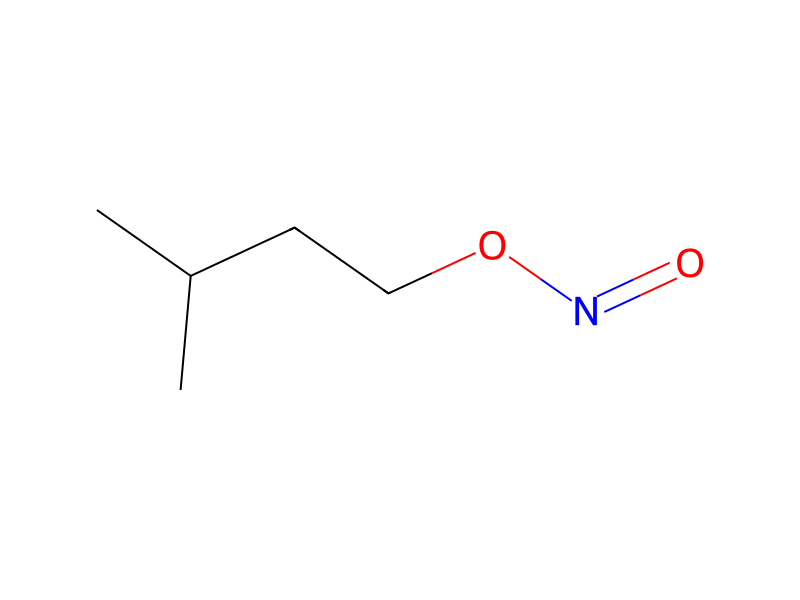
N[C:2]1[C:7]([C:8]#[N:9])=[C:6]([C:10]2[CH:15]=[CH:14][C:13]([O:16][CH2:17][CH2:18][OH:19])=[CH:12][CH:11]=2)[C:5]([C:20]#[N:21])=[C:4]([O:22][CH3:23])[N:3]=1.N(OCCC(C)C)=O.[ClH:32]>C(#N)C.[Cu](Cl)Cl>[Cl:32][C:2]1[C:7]([C:8]#[N:9])=[C:6]([C:10]2[CH:15]=[CH:14][C:13]([O:16][CH2:17][CH2:18][OH:19])=[CH:12][CH:11]=2)[C:5]([C:20]#[N:21])=[C:4]([O:22][CH3:23])[N:3]=13.3 g (10.634 mmol) of 2-amino-4-[4-(2-hydroxyethoxy)phenyl]-6-methoxypyridine-3,5-dicarbonitrile are initially charged in 300 ml of acetonitrile, 8.578 g (63.806 mmol) of copper(II) chloride and 8.59 ml (63.806 mmol) of isoamyl nitrite are added and the mixture is stirred at room temperature overnight. 1N hydrochloric acid is added, and the reaction mixture is extracted with ethyl acetate. The organic phase is washed with saturated aqueous sodium bicarbonate solution and water, dried over sodium sulphate and concentrated. The reaction mixture is purified by preparative HPLC (acetonitrile/water: 10:90→95:5). This gives 2.11 g (58% of theory) of the target compound.