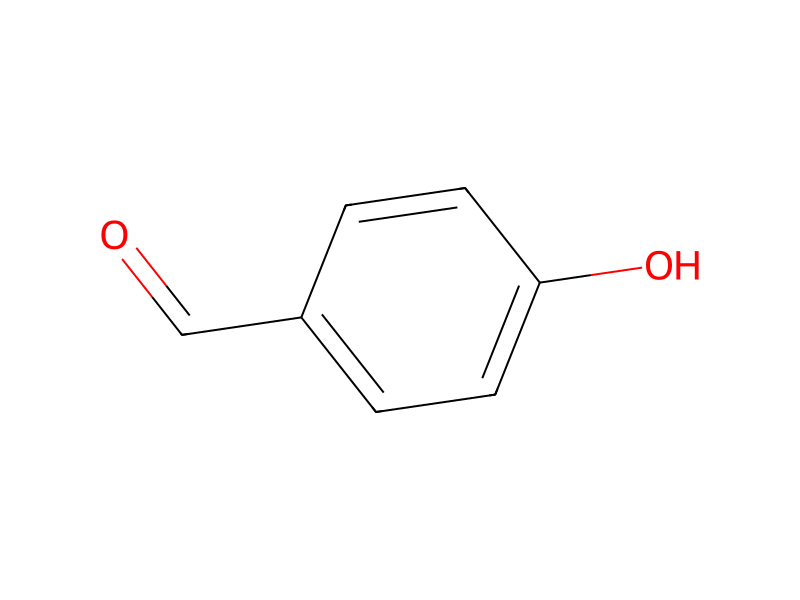
2.44 g (0.02 mol) of 4-hydroxybenzaldehyde, 2.73 g (0.02 mol) of 6-chlorohexanol, 1.66 g (0.012 mol) of potassium carbonate and 20 ml of N,N-dimethylformamide were put in a three-neck 50 ml-flask equipped with a stirrer and a thermometer and heated at 100° C. for 2 hours with stirring. The reaction mixture was cooled to room temperature, poured into water containing ice and extracted with ethyl acetate. The resulting extract was dried with anhydrous sodium sulfate, and ethyl acetate was removed therefrom by distillation. The oily residue was allowed to stand at room temperature, whereupon it gradually crystallized. By silica gel thin layer chromatography (using a developer of ethyl acetate), the purity of the crystals was high. The yield of the product was 4.4 g (99.0%).