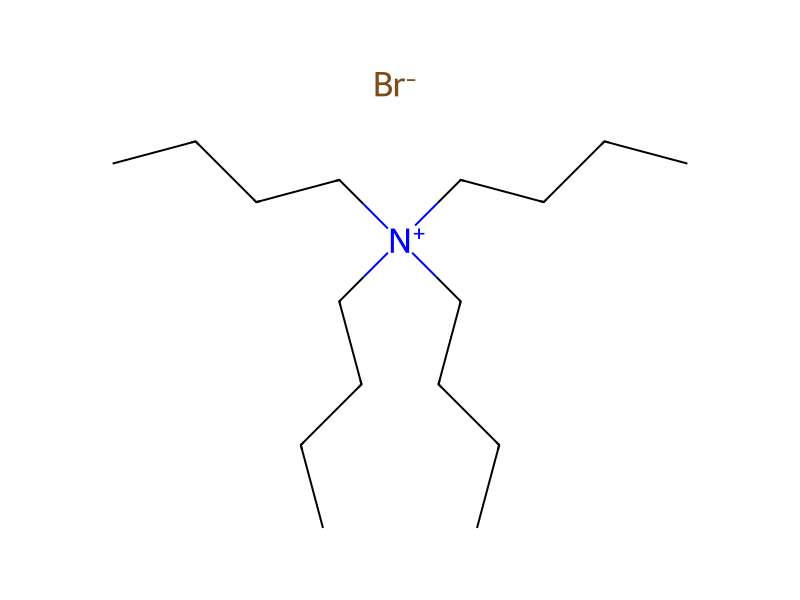
Br[C:2]1[CH:3]=[N:4][CH:5]=[C:6]([Br:8])[CH:7]=1.[OH-].[K+].[N:11]1[CH:16]=[CH:15][CH:14]=[C:13](B(CC)CC)[CH:12]=1>O1CCCC1.[Br-].C([N+](CCCC)(CCCC)CCCC)CCC.C(OCC)(=O)C.C1C=CC([P]([Pd]([P](C2C=CC=CC=2)(C2C=CC=CC=2)C2C=CC=CC=2)([P](C2C=CC=CC=2)(C2C=CC=CC=2)C2C=CC=CC=2)[P](C2C=CC=CC=2)(C2C=CC=CC=2)C2C=CC=CC=2)(C2C=CC=CC=2)C2C=CC=CC=2)=CC=1>[Br:8][C:6]1[CH:5]=[N:4][CH:3]=[C:2]([C:13]2[CH:12]=[N:11][CH:16]=[CH:15][CH:14]=2)[CH:7]=1Tetrakis(triphenylphosphine)palladium (915 mg; 0.75 mM) was added to a solution of 3,5-dibromopyridine (4.74 g, 20 mM) in 75 mL of tetrahydrofuran. After stirring for 5 minutes tetra-n-butylammonium bromide (483 mg; 1.5 mM), finely powdered potassium hydroxide (2.52 g; 45 mM) and 3-pyridyldiethylborane (2.2 g; 15 mM) were added and the resulting reaction mixture was heated to reflux for 2 hours. The reaction mixture was cooled, diluted with 100 mL of ethyl acetate and washed with 10×25 mL of saturated sodium chloride solution and dried over anhydrous magnesium sulfate. Solvent removal gave the crude product which was chromatographed on silica gel using ethyl acetate to give the desired product as a solid, boiling at 135°-6° C./~1 mm in 33% yield.