Benzaldehyde, 3-amino- → 1-(2-Fluoro-5-trifluoromethylphenyl)-3-(3-formylphenyl)urea
反応式
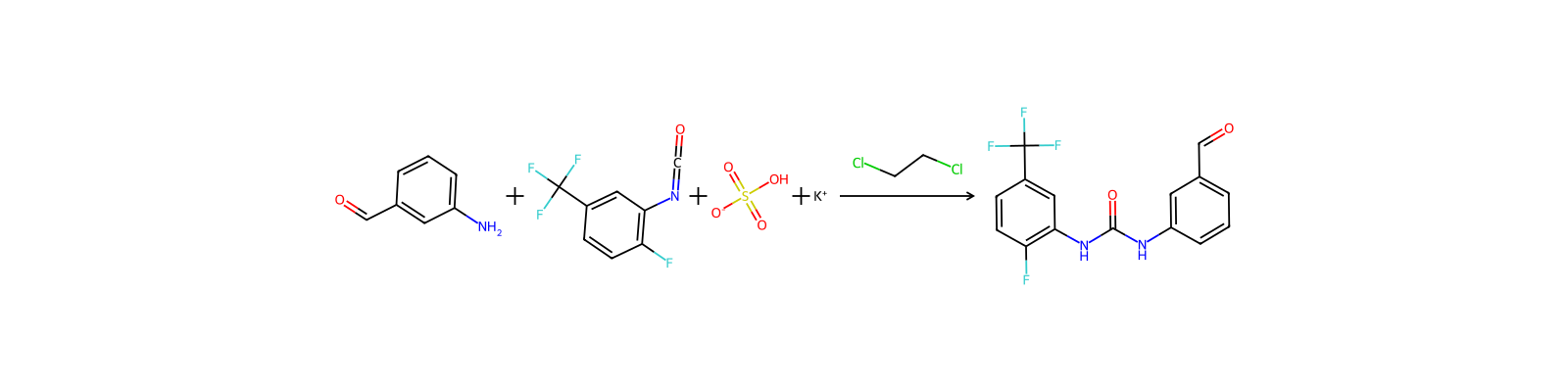
[NH2:1][C:2]1[CH:3]=[C:4]([CH:7]=[CH:8][CH:9]=1)[CH:5]=[O:6].[F:10][C:11]1[CH:16]=[CH:15][C:14]([C:17]([F:20])([F:19])[F:18])=[CH:13][C:12]=1[N:21]=[C:22]=[O:23].S([O-])(O)(=O)=O.[K+]>ClCCCl>[F:10][C:11]1[CH:16]=[CH:15][C:14]([C:17]([F:20])([F:19])[F:18])=[CH:13][C:12]=1[NH:21][C:22]([NH:1][C:2]1[CH:9]=[CH:8][CH:7]=[C:4]([CH:5]=[O:6])[CH:3]=1)=[O:23]参加物
5



実験手順
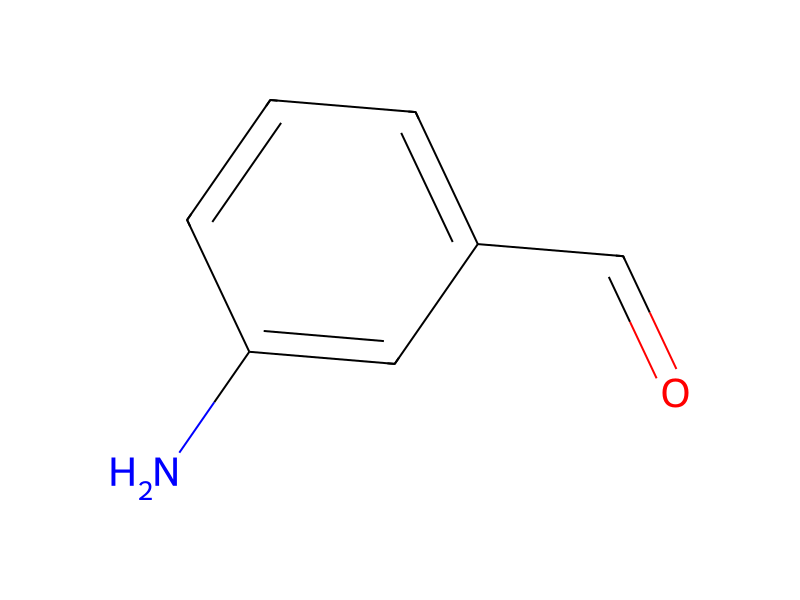
A mixture of 484 mg of 3-aminobenzaldehyde (4 mmol) (polymerized form) and 290 μl of 2-fluoro-5-trifluoromethylphenyl isocyanate in 4 ml of DCE is treated in a CEM Discover microwave oven at 100° C. for 10 minutes (power 90). After cooling, the mixture is poured into 100 ml of saturated potassium hydrogen sulfate solution and extracted with twice 50 ml of ethyl acetate. The combined organic phases are washed with water, dried over sodium sulfate and evaporated. 740 mg of the expected aldehyde (yield=57%) are obtained in an LC/MS purity of 82%. The crude product is used directly for the following steps. ([M+H]+): 327. RT=4.28 min (acetonitrile/water gradient from 30% to 90%—Method B).