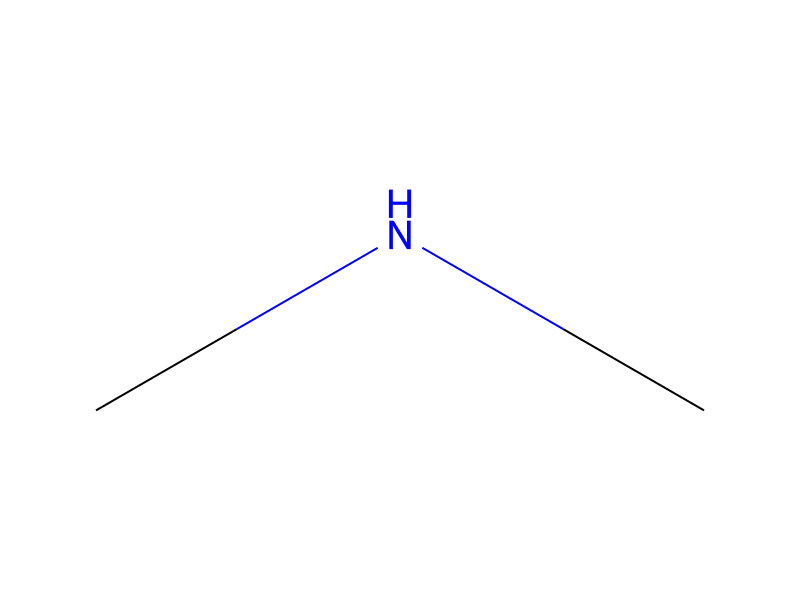
Dimethylamine → 3-(Dimethylamino)-1-(2-thienyl)-1-propanone
HRID 1686171
反応式

[C:1]([C:4]1[S:5][CH:6]=[CH:7][CH:8]=1)(=[O:3])[CH3:2].[CH2:9]=O.[CH3:11][NH:12][CH3:13]>>[CH3:11][N:12]([CH3:9])[CH2:13][CH2:2][C:1]([C:4]1[S:5][CH:6]=[CH:7][CH:8]=1)=[O:3]参加物
4



実験手順
In this example, 2-acetylthiophene is used as the starting material for reacting with formaldehyde and dimethylamine to form a Mannich product namely 3-dimethylamino-1-(2-thienyl)propan-1-one. A hydride reduction is performed on this propanone to form corresponding 3-dimethylamino-1-(2-thienyl)propan-1-ol. The resulting propanol is then reacted with fluoronaphthalene to form N,N-dimethyl-3-(1-naphthyloxy)-3-(2-thienyl)propylamine. Subsequently, racemic Duloxetine® is obtained by demethylation of this propylamine. In this process, the yield of demethylation is very low, about 41%. In addition, Duloxetine® produced via this route is racemic. Resolution is therefore needed to obtain chiral Duloxetine which renders this process less competitive.