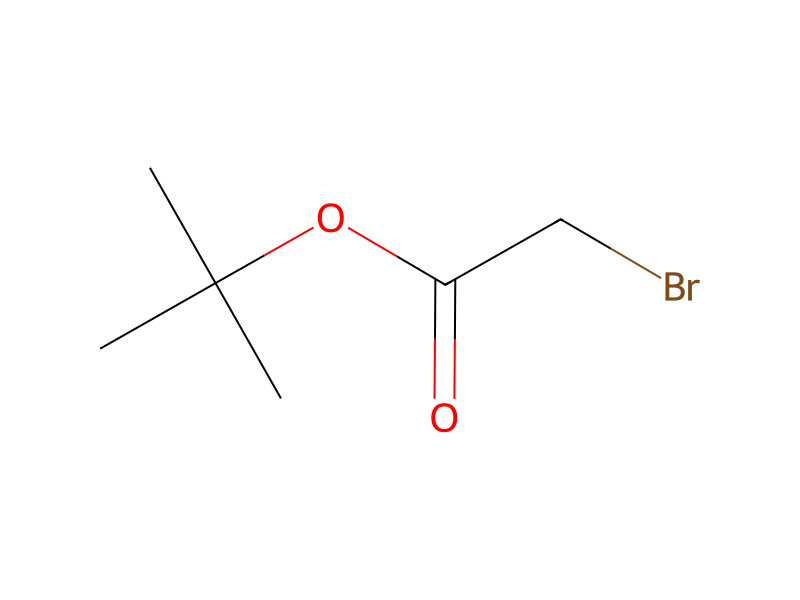
Br.[NH2:2][CH:3]1[C:9](=[O:10])[NH:8][C:7]2[CH:11]=[CH:12][CH:13]=[CH:14][C:6]=2[S:5][CH:4]1[C:15]1[CH:20]=[CH:19][CH:18]=[CH:17][CH:16]=1.[H-].[Na+].Br[CH2:24][C:25]([O:27][C:28]([CH3:31])([CH3:30])[CH3:29])=[O:26]>CN(C)C=O>[NH2:2][CH:3]1[C:9](=[O:10])[N:8]([CH2:24][C:25]([O:27][C:28]([CH3:31])([CH3:30])[CH3:29])=[O:26])[C:7]2[CH:11]=[CH:12][CH:13]=[CH:14][C:6]=2[S:5][CH:4]1[C:15]1[CH:16]=[CH:17][CH:18]=[CH:19][CH:20]=14.8 g of 3-amino-2-phenyl-2,3-dihydro-1,5-benzothiazepin-4(5H)-one hydrobromide was dissolved in 80 ml of N,N-dimethylformamide. After the addition of 1.2 g of sodium hydride (in the form of a 60% suspension in oil), the resulting mixture was stirred at 50° C. for an hour. Then, a solution of 2.7 g of t-butyl bromoacetate in 10 ml of N,N-dimethylformamide was added and the mixture was stirred at 50° C. for an additional hour. After the solvent was distilled off under reduced pressure, hexane was added to the residue so as to cause crystallization. The product was separated by filtration and washed with ether, with water and then with ether to obtain 4.0 g of the desired compound. This compound had a melting point of 178°-180° C.