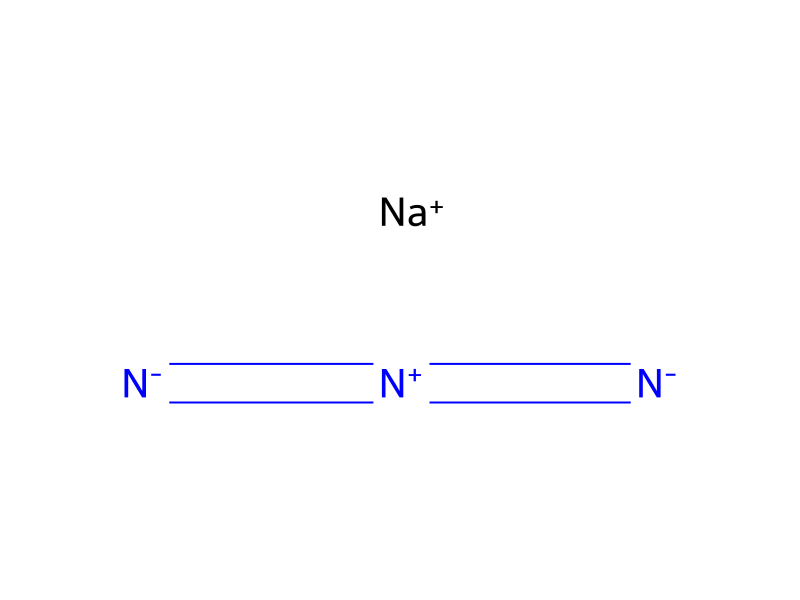
N([O-])=O.[Na+].[C:5]([NH:8][CH:9]1[CH2:17][C:16]2[C:11](=[CH:12][C:13]([N+:19]([O-:21])=O)=[C:14]([NH2:18])[CH:15]=2)[CH2:10]1)(=[O:7])[CH3:6].S(=O)(=O)(O)O.[N-]=[N+]=[N-].[Na+]>C(O)(=O)C.O>[C:5]([NH:8][C:9]1[CH:10]=[C:11]2[C:16](=[CH:15][C:14]3[C:13](=[CH:12]2)[NH:19][O:21][N:18]=3)[CH:17]=1)(=[O:7])[CH3:6]At 0° C., 0.46 g (6.6 mmol) of NaNO2, and then 1.4 g (6 mmol) of the product of Step 1 dissolved in 10 ml of acetic acid, are added to 3 ml of sulphuric acid. After 15 minutes at 0° C., the mixture is poured onto 20 g of ice. The solution so obtained is poured dropwise into a vigorously stirred solution of 600 mg (9.2 mmol) of sodium azide in 12 ml of water. The whole is stirred for 10 minutes at room temperature and extracted 3 times with 40 ml of CH2Cl2 each time. The organic phases are washed with an aqueous 10% sodium carbonate solution, dried over MgSO4 and filtered and 100 ml of dry toluene are added. The methylene chloride is evaporated off and the toluene solution so obtained is heated at reflux for 3 hours.