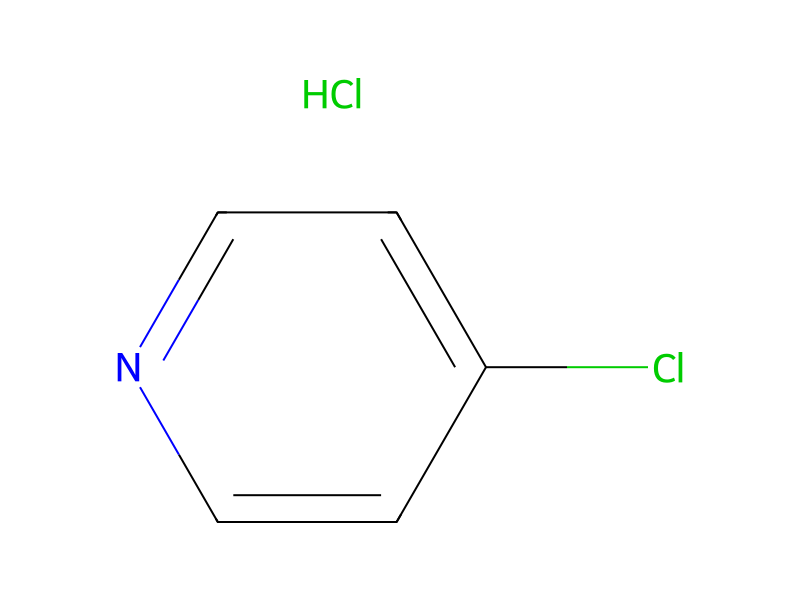
A mixture of 3 g (0.02 m) of 4-chloropyridine hydrochloride and 5.3 g (0.02 m) of 5-[2-(4-chlorophenyl)-ethyl]barbituric acid was thoroughly mixed with a mortar and pestle, heated in a 200° C. oil bath for 15-20 minutes, and then cooled. To the resulting product was added 5 g of NaOH and 40 mL of water, and the mixture was refluxed for several hours. After cooling the mixture, it was acidified with concentrated HCl, again refluxed for 45 minutes, and then cooled. The resulting material was diluted into water; the pH of the aqueous solution was adjusted to 7-8 with dilute NaOH; then the product was extracted into CH2Cl2. The CH2Cl2 layer was separated, filtered through phase separating paper, and concentrated. The residue was adsorbed onto silica gel and chromatographed using 5% EtOAc/CH2Cl2 >10% EtOAc/CH2Cl2 >5% MeOH/EtOAc (wash). Yield 0.82 g.