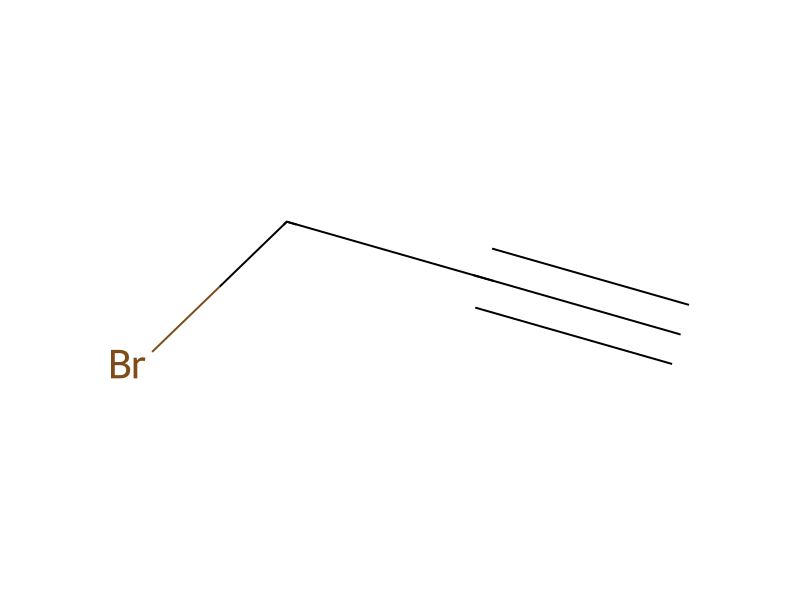
Into a reaction flask fitted with a stirrer, a thermometer, a nitrogen gas inlet tube and a reflux condenser, were placed 26.677 parts of 2-hydroxyanthracene, 49.444 parts of deionized water, 6.217 parts of NaOH and 0.096 part of tetrabutylammonium bromide and to this mixture, 18.859 parts of propargyl bromide was added dropwise and reacted at 80° C. for 6 hours. After completion of the reaction, the content was treated with a mixture of ethyl acetate and deionized water and the ethyl acetate layer was separated, added with magnesium sulfate and kept standing overnight to effect dehydration. After filtering off magnesium sulfate, the solvent was removed off by an evaporator and the residue was subjected to a column chromatography (silica gel 200 mesh) to obtain a purified 2propargyloxyanthracene. Yield 43.6%