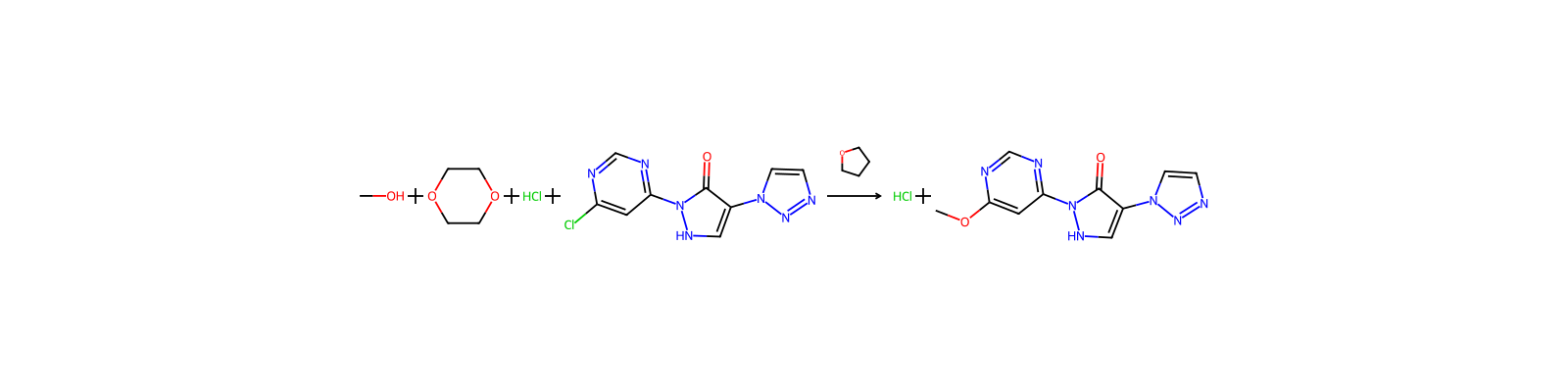
0.3 ml (6.6 mmol) methanol are initially introduced into 15 ml dioxane. 1.3 ml (2.7 mmol) of a 2 M solution of the phosphazene base P2-tert-butyl in THF are added slowly, while stirring, and the mixture is stirred at RT for 15 min 350 mg (1.3 mmol) of the compound from Example 52A are subsequently added and the mixture is reacted in a single mode microwave (CEM Explorer) at 150° C. for 2 h. A further 2 ml (49.2 mmol) methanol are then added and the mixture is reacted again in a single mode microwave (CEM Explorer) under the same conditions for 2 h. After cooling, the reaction mixture is concentrated and the residue is purified via preparative HPLC (RP18 column; mobile phase: acetonitrile/water gradient with addition of 0.1% TFA). The product-containing fractions are combined and the mixture is concentrated on a rotary evaporator. The residue is dried under a high vacuum and 3 ml of a 4 N solution of hydrogen chloride in dioxane is subsequently added. The mixture is stirred at RT for 30 min and the solid is then filtered off and dried under a high vacuum.