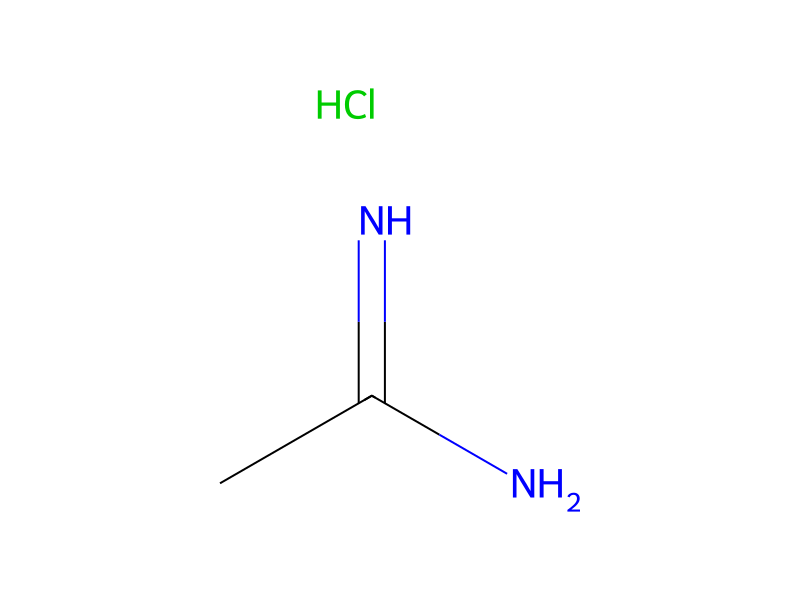
[Cl:1][C:2]1[CH:3]=[CH:4][C:5]2[N:11]=[C:10]([NH:12][NH2:13])[CH2:9][N:8]=[C:7]([C:14]3[CH:19]=[CH:18][CH:17]=[CH:16][CH:15]=3)[C:6]=2[CH:20]=1.Cl.[C:22](N)(=[NH:24])[CH3:23].CC1NC=CN=1>C(Cl)(Cl)Cl>[NH2:24][C:22](=[N:13][NH:12][C:10]1[CH2:9][N:8]=[C:7]([C:14]2[CH:19]=[CH:18][CH:17]=[CH:16][CH:15]=2)[C:6]2[CH:20]=[C:2]([Cl:1])[CH:3]=[CH:4][C:5]=2[N:11]=1)[CH3:23]A mixture of 2.8 parts of 7-chloro-2-hydrazino-5-phenyl-3H-1,4-benzodiazepine, 2.8 parts of acetamidine hydrochloride, 2.5 parts of 2-methylimidazole and 100 parts by volume of chloroform is stirred at room temperature for 24 hours. The chloroform layer is washed with water, dried over sodium sulfate and the solvent is evaporated. After treating the residue with diethyl ether, the resulting crystals are subjected to extraction with hot methanol. Evaporation of the methanol gives 2-(α-aminoethylidene) hydrazino-7-chloro-5-phenyl-3H-1,4-benzodiazepine as crystals. Recrystallization from acetone yields pale yellow needles melting at 203° C to 205° C (effervescence).