Sodium Azide → 3-(3-azidopropyl)-5-chloro-1H-indole
HRID 1777525
反応式

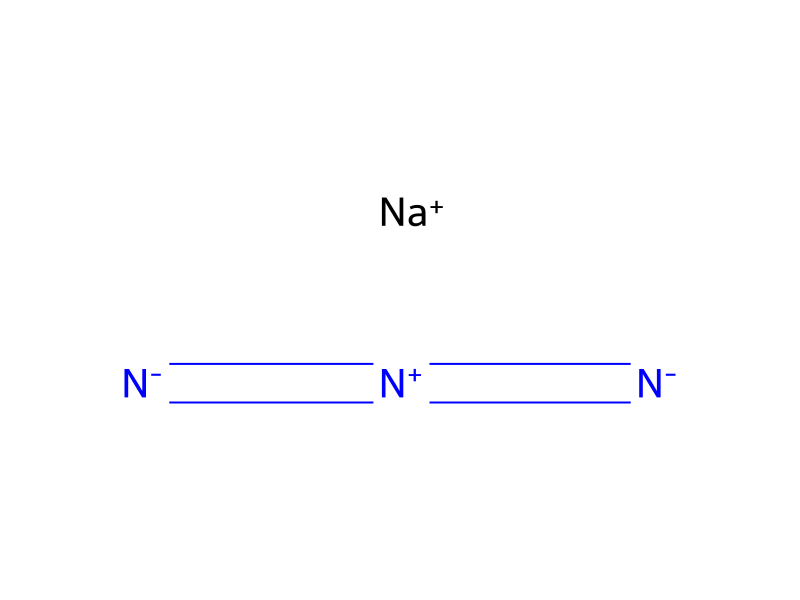
Br[CH2:2][CH2:3][CH2:4][C:5]1[C:13]2[C:8](=[CH:9][CH:10]=[C:11]([Cl:14])[CH:12]=2)[NH:7][CH:6]=1.[N-:15]=[N+:16]=[N-:17].[Na+]>CN(C=O)C>[N:15]([CH2:2][CH2:3][CH2:4][C:5]1[C:13]2[C:8](=[CH:9][CH:10]=[C:11]([Cl:14])[CH:12]=2)[NH:7][CH:6]=1)=[N+:16]=[N-:17]参加物
4



実験手順
A mixture of 3-(3-bromopropyl)-5-chloro-1H-indole (0.730 g; 2.68 mmol) and sodium azide (0.522 g; 8.03 mmol) was stirred in DMF (5 mL) for 18 hours and was then concentrated under reduced pressure. The residue was partitioned between water and dichloromethane. After separation, the organic layer was dried over magnesium sulfate and the volatiles were evaporated under reduced pressure to give quantitatively 3-(3-azidopropyl)-5-chloro-1H-indole as an oily residue which was used without purification in the next step.