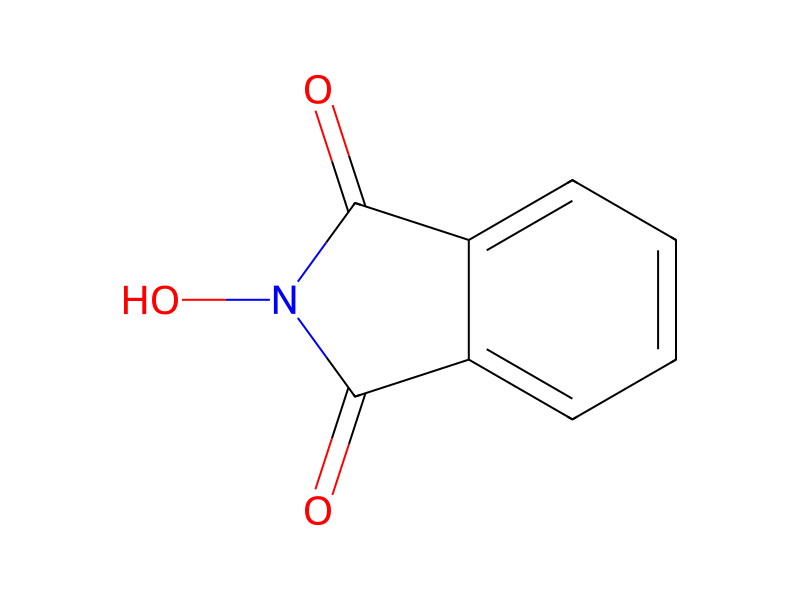
2,2-Dimethyl-[1,3]dioxan-5-ol was prepared as described previously (Forbes, D. C. et al.; Synthesis, 1998; 6:879–882). 1H NMR (400 MHz; DMSO-d6) δ 4.91 (d, 1H, J=5.1), 3.70–3.75 (m, 2 H), 3.41–3.46 (m, 3 H), 1.30 (s, 3 H), 1.24 (s, 3 H); MS (APCI+)=132.9. To a stirring solution of 2,2-dimethyl-[1,3]dioxan-5-ol (1.50 g, 11.35 mmol), N-hydroxyphthalimide (1.85 g, 11.35 mmol), and triphenylphosphine (2.98 g, 11.35 mmol) in anhydrous tetrahydrofuran (30 mL) at 0° C. was added diethyl azodicarboxylate (2.3 mL, 14.75 mmol). The resultant solution was allowed to warm to room temperature. After stirring for 3 hours, the mixture was concentrated in vacuo and charged with chloroform affording white solids. The solids were filtered off and filtrate was collected and concentrated. The residue was purified via silica column chromatography (4:1 hexanes/ethyl acetate) affording 2-(2,2-dimethyl-[1,3]dioxan-5-yloxy)-isoindole-1,3-dione as clear crystals (1.74 g, 55% over 2 steps): 1H NMR (400 MHz; DMSO-d6) δ 7.83 (s, 4 H), 4.11–4.12 (m, 1 H), 4.04–4.09 (m, 2 H), 3.92–3.96 (m, 2 H), 1.32 (s, 3 H), 1.25 (s, 3 H); MS (APCI+)=278.0.