Benzaldehyde → 5-Phenyldipyrromethane
反応式

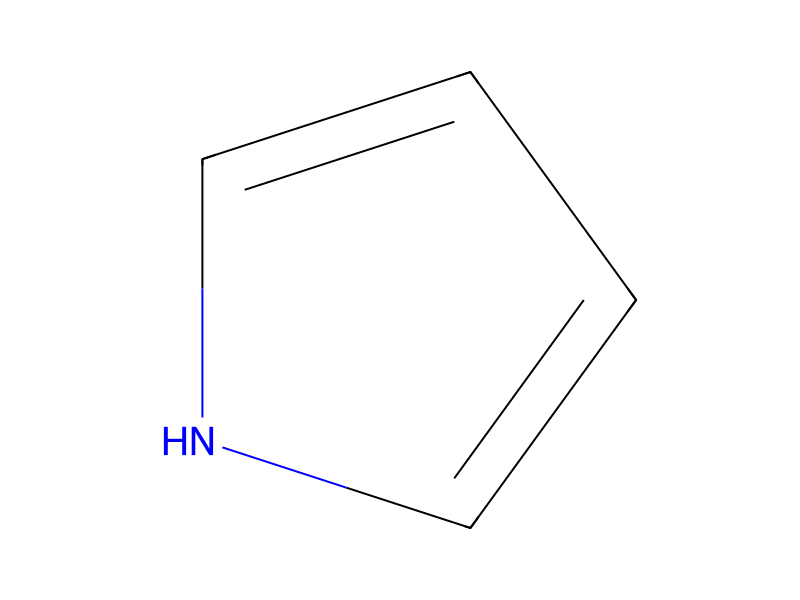
[CH:1](=O)[C:2]1[CH:7]=[CH:6][CH:5]=[CH:4][CH:3]=1.[NH:9]1[CH:13]=[CH:12][CH:11]=[CH:10]1>>[CH:5]1[CH:6]=[CH:7][C:2]([CH:1]([C:10]2[NH:9][CH:13]=[CH:12][CH:11]=2)[C:13]2[NH:9][CH:10]=[CH:11][CH:12]=2)=[CH:3][CH:4]=1参加物
3


実験手順
Conclusion. The one-flask solventless reaction of an aldehyde with excess pyrrole provides a simple means of preparing the corresponding dipyrromethane. A wide variety of Brønsted or Lewis acids can be employed as catalyst. The Brønsted acids that afford product also give a dark reaction mixture, while the Lewis acids give less discoloration. Excellent results were obtained with InCl3 (for benzaldehyde and other aryl aldehydes) and MgBr2 (for mesitaldehyde). The workup procedure entails quenching with NaOH, filtration, removal of pyrrole, and crystallization. The simplicity of this procedure (no aqueous/organic extraction, distillation, or chromatography) minimizes waste and enables scalability. The absence of any reaction solvent other than pyrrole enables facile recovery of the excess pyrrole from the crude reaction mixture; the recovered pyrrole can be reused. Indeed, the reaction of 0.75 mmol of benzaldehyde in 5.2 L of pyrrole gave 116 g of 5-phenyldipyrromethane and recovery of 90% of the excess pyrrole in a form suitable for reuse. Characterization of the purity of dipyrromethanes is best accomplished using a combination of analytical techniques, including gas chromatography. Given that the N-confused dipyrromethane(s) and the tripyrrane(s) are dominant byproducts of the reaction, and the former is an isomer while the latter is an oligomer of the dipyrromethane, a satisfactory elemental analysis is a necessary but insufficient criterion of purity.