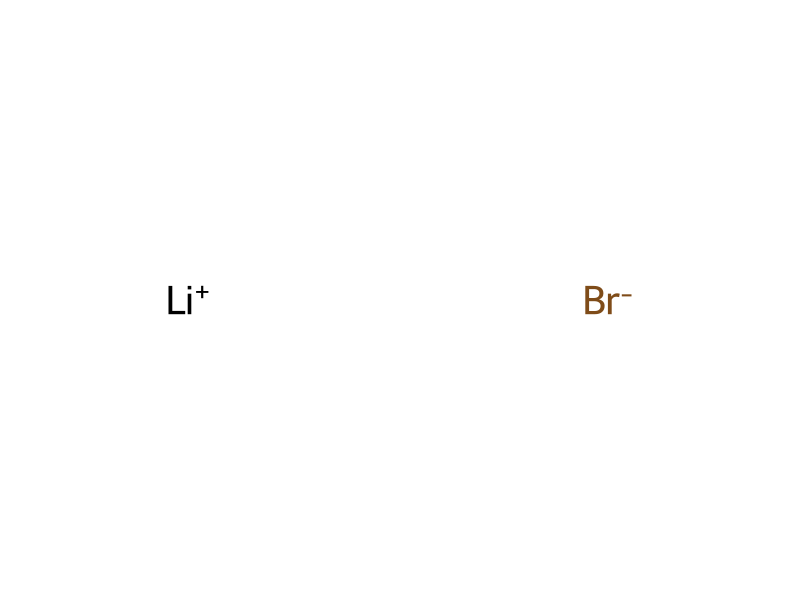
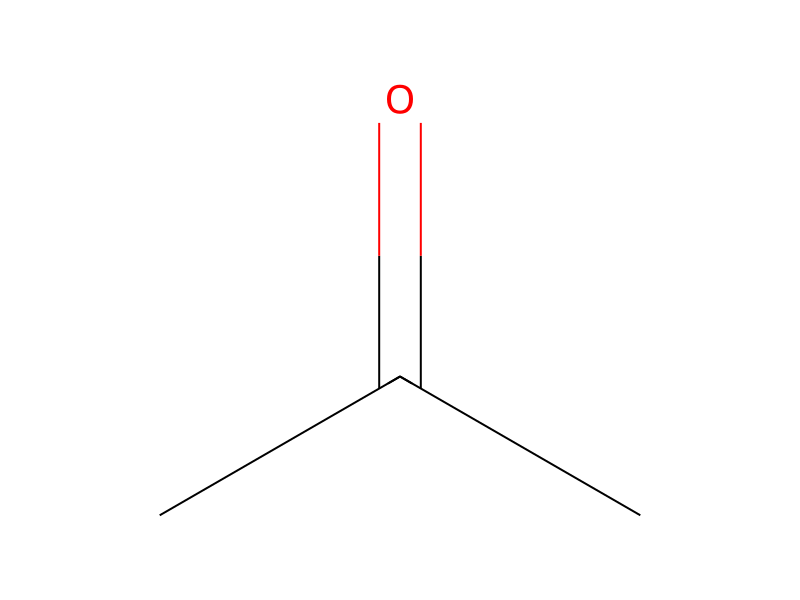
Synthesis of Compound 1 Lithium aluminum hydride (134.8 mL of a 1 M solution in ether, 134.8 mmol) was added dropwise to a stirring solution of cis-cyclobutane-1,2-dicarboxylic acid (9.71 g, 67.39 mmol) in THF (120 mL) at 0° C. under argon. The mixture was allowed to warm to room temperature and stirred for 16 hours. The mixture was cooled to 0° C. and quenched by careful addition of water (5.2 mL), sodium hydroxide solution (5.2 mL of a 15% w/v solution), and water (15.7 mL). The mixture was stirred for 15 minutes, and the precipitate was removed by filtration. The solvent was evaporated under reduced pressure to give the alcohol 1 as a pale yellow oil (6.73 g, 57.64 mmol, 85%); δH (400 MHz; CDCl3): 3.85 (2H, m), 3.6 (2H, m), 2.9 (2H, s), 2.7 (2H, m), 2 (2H, m); 1.55 (2H, m). Synthesis of Compound 2 Mesyl chloride (29.3 mL, 373.8 mmol) was added dropwise to a stirring solution of 1 (8.85 g, 75.8 mmol) in dichloromethane (500 mL) at −40° C. under argon. Triethylamine (63.4 mL, 454.4 mmol) was then added dropwise, and the mixture was allowed to warm slowly to room temperature. After stirring for 16 hours, the mixture was quenched by addition of dilute hydrochloric acid (100 mL). The organic layer was separated, and the aqueous layer was further extracted with dichloromethane (2×100 mL). The combined organic fractions were washed with brine, dried (MgSO4), and the solvent was evaporated under reduced pressure. The residue was chromatographed (SiO2, heptane-ethyl acetate, 6:4) to give the mesylate 2 (15.89 g, 58.3 mmol, 77%) as a white solid; δH (400 MHz; CDCl3): 3.0 (6H, m), 2.6 (2H, m), 2.05 (2H, m), 1.8 (2H, m). Synthesis of Compound 3 Anhydrous lithium bromide (25 g, 287.3 mmol) was added to a stirring mixture of 2 (15.84 g, 57.4 mmol) in acetone (150 mL) under argon, and the mixture was refluxed for 2 hours. After cooling, the acetone was evaporated under reduced pressure, and the residue was taken up in ether (100 mL), washed with water (100 mL), brine, dried (MgSO4), and the solvent was evaporated under reduced pressure to give the dibromide 3 (13.5 g, 55.8 mmol, 97%) as an orange liquid; δH (400 MHz; CDCl3): 3.5 (4H, m), 2.45 (2H, m), 2.05 (2H, m), 1.6 (2H, m). Synthesis of Compound 4 To a cooled (0° C.) suspension of potassium hydride (1.08 g, 27 mmol) (previously washed 3 times with pentane) in THF (15 mL) was added, under an argon atmosphere, a solution of methyl methylthiomethyl sulfoxide (0.93 mL, 8.92 mmol, previously dried over molecular sieves for 3 hours) in THF (2 mL) over a period of 1 hour. After stirring for a further 30 minutes, a solution of 3 (2.16 g, 8.93 mmol) in THF (1 mL) was added, at 0° C., over a period of 1 hour. The reaction mixture was then allowed to warm up to room temperature and was stirred overnight. The mixture was quenched by addition of aqueous ammonium chloride (6 mL, 25%). After 10 minutes, the solid was filtered off and the filtrate concentrated. The residue was taken up in ether (20 mL), and 9N sulfuric acid (0.03 mL) was added. After stirring for 30 hours, saturated sodium hydrogen carbonate was added. The ether phase was separated and concentrated to 5 mL. Saturated sodium hydrogen sulphite (1.5 g) solution was added and the mixture stirred for 30 minutes. The phases were separated. The ethereal phase was stirred for further 30 minutes with a saturated sodium hydrogen sulphite (0.5 g) solution. The phases were separated, and the collected aqueous phases were treated with aqueous sodium hydroxide (5 mL, 20%) and extracted with ether. The ether phase was dried (MgSO4), and the solvent was evaporated under reduced pressure to give 4 as a yellow liquid (0.141 δH, 15%); SH (400 MHz; CDCl3): 2.25 (4H, m), 2.0 (4H, m), 1.7 (2H, m). Synthesis of Compound 5 Triethyl phosphonoacetate (0.28 mL, 1.41 mmol) was added dropwise to a stirring suspension of sodium hydride (0.052 g of a 60% dispersion in oil, 1.29 mmol) in THF (2 mL) at 0° C. under argon. After 20 minutes, ketone 4 (0.141 g, 1.28 mmol) in THF (1 mL) was added dropwise. The mixture was allowed to warm to room temperature and stirred for 16 hours. Water (5 mL) was added, and the mixture was extracted. The combined organic fractions were washed with brine and dried (MgSO4). The solvent was evaporated under reduced pressure. The residue was chromatographed (SiO2, heptane/ethyl acetate, 95:5) to give the ester 5 (0.092 g, 0.51 mmol, 40%) as a colorless oil; δH (400 MHz; CDCl3): 5.85 (1H, s), 4.1 (2H, q), 3.1 (1H, d.d), 2.45 (1H, d.d), 2.2 (2H, m), 1.75 (2H, m), 1.4 (2H, m), 1.25 (3H, t); δC (400 MHz; CDCl3): 170.53, 166.57, 115.13, 59.62, 47.06, 45.69, 39.89, 37.24, 28.52, 28.17, 14.44. Synthesis of Compound 6 Ester 5 (0.09 g, 0.5 mmol), nitromethane (0.055 mL, 1.02 mmol), and tetra-butylammonium fluoride (0.61 mL of a 1 M solution in THF, 0.61 mmol) were heated to 65° C. in THF (1 mL) for 4 hours. The mixture was allowed to cool, diluted with ether (30 mL), and acidified with 2N hydrochloric acid (5 mL). The organic layer was washed with brine, dried (MgSO4), and the solvent was evaporated under reduced pressure. The residue was chromatographed (SiO2, heptane/ether, 95:5) to give nitro-ester 6 (0.063 g, 0.26 mmol, 52%) as a colorless liquid. δH (400 MHz; CDCl3): 4.65 (2H, [AB]q), 4.15 (2H, q), 2.65 (2H, [AB]q), 1.2–1.95 (3H, t and m, 13H); δC (400 MHz; CDC13): 171.28, 82.42, 60.56, 49.97, 45.80, 45.32, 42.88, 40.19, 40.09, 27.64, 14.26. Synthesis of Compounds 7A and 7B Nitro-ester 6 (0.063 g, 0.26 mmol) in methanol (10 mL) was shaken over a catalytic amount of nickel sponge catalyst under a hydrogen atmosphere (50 Psi, 30° C.) for 12 hours. The mixture was filtered, and the solvent was evaporated under reduced pressure to give a mixture of lactam 7A and amino-ester 7B (0.051 g) as a white solid. This was used without further purification and characterization.