2,6-Dibromopyridine → 2-(6-Bromopyridin-2-yl)-5-fluorobenzonitrile
HRID 1796043
反応式

Br[C:2]1[CH:7]=[CH:6][CH:5]=[C:4]([Br:8])[N:3]=1.[F:9][C:10]1[CH:11]=[CH:12][C:13](C2C=CC=C(C3N4C=CC(C(O)(C)C)=NC4=NC=3)N=2)=[C:14]([CH:17]=1)[C:15]#[N:16]>>[Br:8][C:4]1[N:3]=[C:2]([C:13]2[CH:12]=[CH:11][C:10]([F:9])=[CH:17][C:14]=2[C:15]#[N:16])[CH:7]=[CH:6][CH:5]=1参加物
3
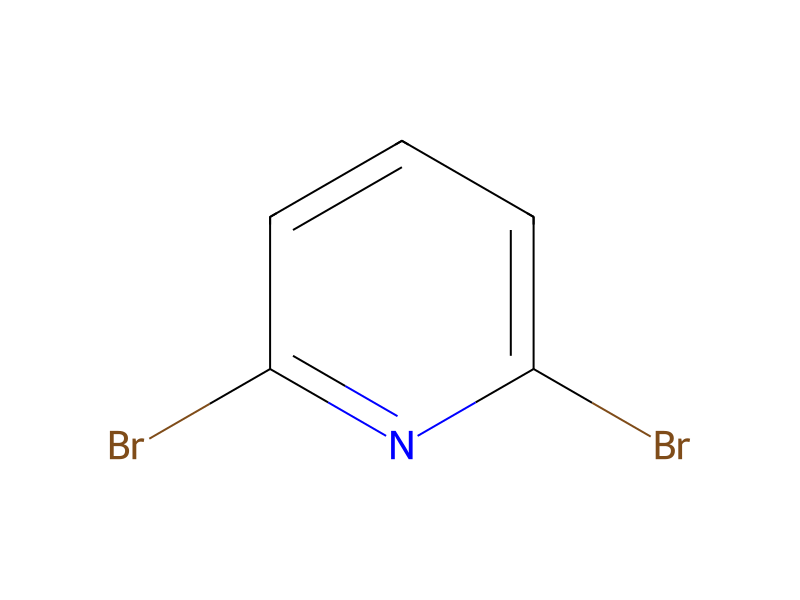


実験手順
2,6-Dibromopyridine (1.17 g, 5.0 mmol) was coupled to 5-fluoro-2-(4,4,5,5-tetramethyl-[1,3,2]dioxaborolan-2-yl)benzonitrile (synthesised as in Example 22) (1.48 g, 6.0 mmol) as described in Example 27 to afford 2-(6-bromopyridin-2-yl)-5-fluorobenzonitrile (0.69 g, 50%) as a white solid: δH (400 MHz, CDCl3) 1.42 (9H, s), 6.96 (1H, d, J 7), 7.45 (1H, d, J 1), 7.72 (1H, d, J 1), 8.33 (1H, d, J 7).
出典と根拠
- ORDレコード
- ord-fcb3daf6444f46ecae04984dc313354c
- 出典データセット
- uspto-grants-2006_04
- 特許番号
- US07030128B2