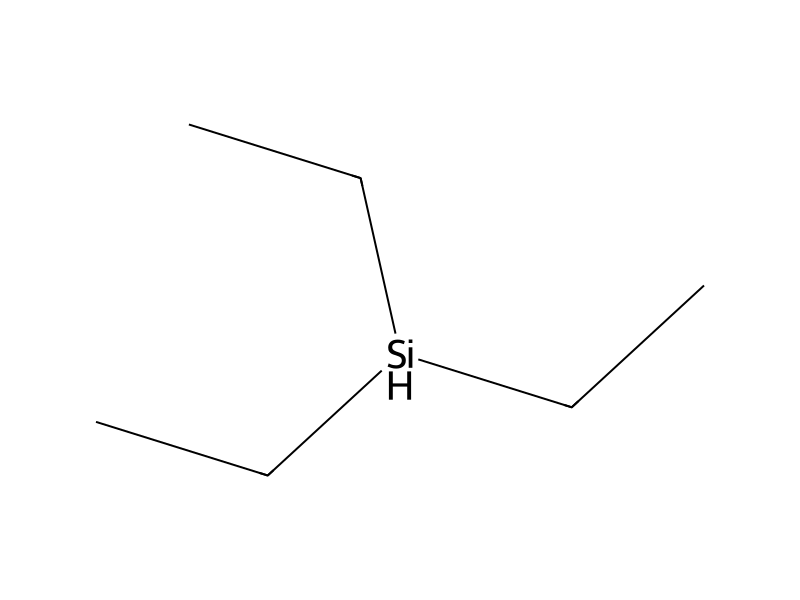
[CH3:1][O:2][C:3]([C:5]1[C:6]2[CH:7](O)[C:8]([CH3:24])([CH3:23])[CH:9]([C:16]3[CH:21]=[CH:20][CH:19]=[C:18]([Br:22])[CH:17]=3)[NH:10][C:11]=2[CH:12]=[C:13]([Cl:15])[CH:14]=1)=[O:4].C([SiH](CC)CC)C>FC(F)(F)C(O)=O>[CH3:1][O:2][C:3]([C:5]1[C:6]2[CH2:7][C:8]([CH3:24])([CH3:23])[CH:9]([C:16]3[CH:21]=[CH:20][CH:19]=[C:18]([Br:22])[CH:17]=3)[NH:10][C:11]=2[CH:12]=[C:13]([Cl:15])[CH:14]=1)=[O:4]To a stirred mixture solution of 2-(3-bromo-phenyl)-7-chloro-4-hydroxy-3,3-dimethyl-1,2,3,4-tetrahydro-quinoline-5-carboxylic acid methyl ester (48 g, 113.2 mmol) and triethylsilane (60 mL) at 25° C. was added trifluoroacetic acid (30 mL) dropwise. The resulting mixture solution was stirred at 25° C. for 3 hours. Then the reaction mixture was concentrated in vacuo and the residue was extracted with ethyl acetate (2×200 mL), washed with saturated aqueous sodium bicarbonate solution (4×100 mL), dried over anhydrous sodium sulfate and concentrated in vacuo. The residue was triturated with methanol. The resulting precipitate was collected, dried in vacuo to afford 2-(3-bromo-phenyl)-7-chloro-3,3-dimethyl-1,2,3,4-tetrahydro-quinoline-5-carboxylic acid methyl ester (15 g, 32.6%) as a white solid: LC/MS m/e calcd for C19H19BrClNO2 (M+H)+: 409.73, observed: 407.9 & 409.9.