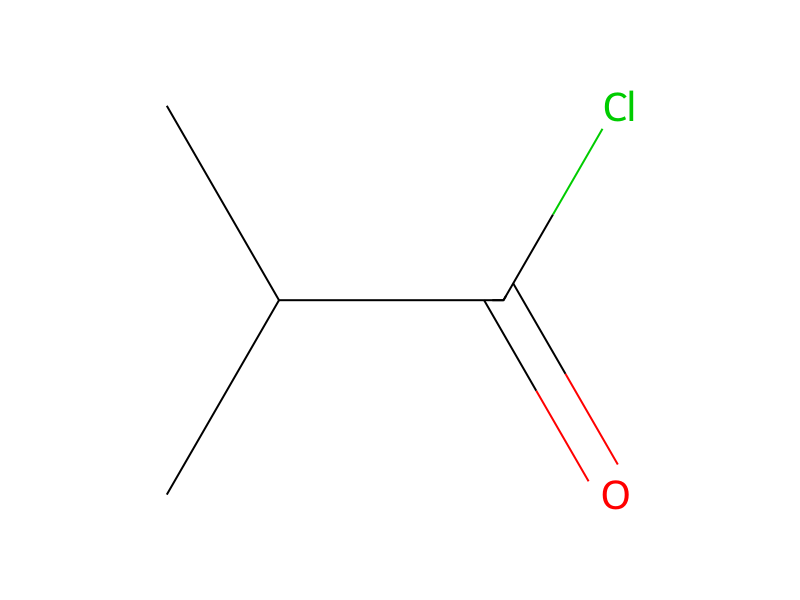
[NH2:1][C:2]1[CH:3]=[C:4]([CH:9]2[C:18]([CH3:20])([CH3:19])[CH2:17][C:16]3[C:11](=[CH:12][CH:13]=[C:14]([C:21]([O:23][CH3:24])=[O:22])[CH:15]=3)[NH:10]2)[CH:5]=[CH:6][C:7]=1[Cl:8].C(N(CC)C(C)C)(C)C.[C:34](Cl)(=[O:38])[CH:35]([CH3:37])[CH3:36].C(OCC)(=O)C>ClCCl>[Cl:8][C:7]1[CH:6]=[CH:5][C:4]([CH:9]2[C:18]([CH3:19])([CH3:20])[CH2:17][C:16]3[C:11](=[CH:12][CH:13]=[C:14]([C:21]([O:23][CH3:24])=[O:22])[CH:15]=3)[NH:10]2)=[CH:3][C:2]=1[NH:1][C:34](=[O:38])[CH:35]([CH3:37])[CH3:36]To a solution of methyl 2-(3-amino-4-chlorophenyl)-3,3-dimethyl-1,2,3,4-tetrahydroquinoline-6-carboxylate (182 mg, 0.53 mmol) in dichloromethane (5 mL) was added N,N-diisopropyle thylamine (136 mg, 1.06 mmol) with ice cooling, followed by the addition of isobutyryl chloride (84 mg, 0.8 mmol) in dichloromethane (2 mL) via syringe. The resultant mixture was stirred at room temperature overnight. Thin layer chromatography (petroleum ether: ethyl acetate=10:1) showed the reaction was complete. The mixture was separated by Preparative Thin layer chromatography to afford 240 mg of methyl 2-(4-chloro-3-isobutyramidophenyl)-3,3-dimethyl-1,2,3,4-tetrahydroquinoline-6-carboxylate, which was used in next step without further purification.
読み込み中…