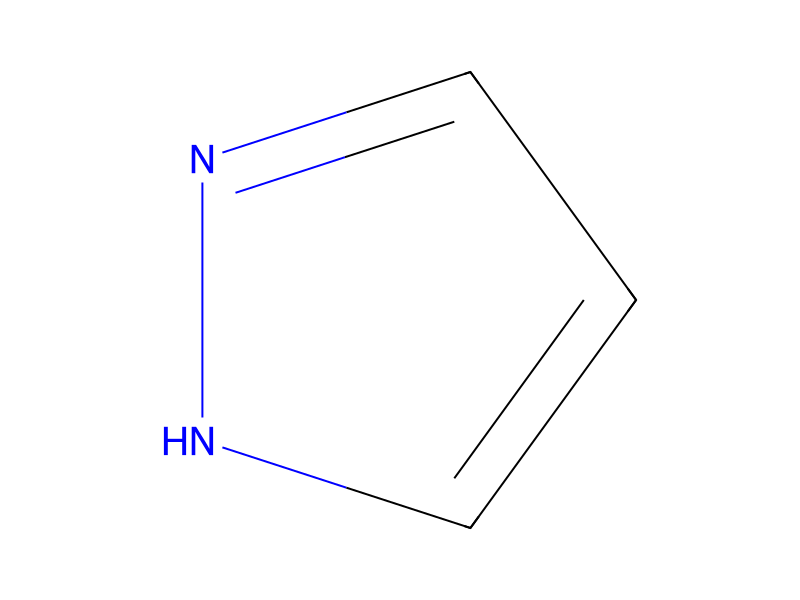
A solution of 0.200 g (0.845 mmol) of 3-fluoro-5,5,8,8-tetramethyl-5,6,7,8-tetrahydro-2-naphthaldehyde, 0.058 g (0.854 mmol) of pyrazole, and 0.130 g (0.939 mmol) of potassium carbonate in 2 mL dimethylsulfoxide was heated to 95° C. for 18 hours. The reaction mixture was cooled to room temperature and partitioned between ethyl acetate and water. The organic layer was washed with brine, dried over anhydrous sodium sulfate, and concentrated in vacuo. The product was purified on flash chromatography on silica gel (5% ethyl acetate/hexane) to afford 0.101 g (42%) of 5,5,8,8-tetramethyl-3-pyrazol-1-yl-5,6,7,8-tetrahydro-2-naphthaldehyde. (mp=95.7-97.6).