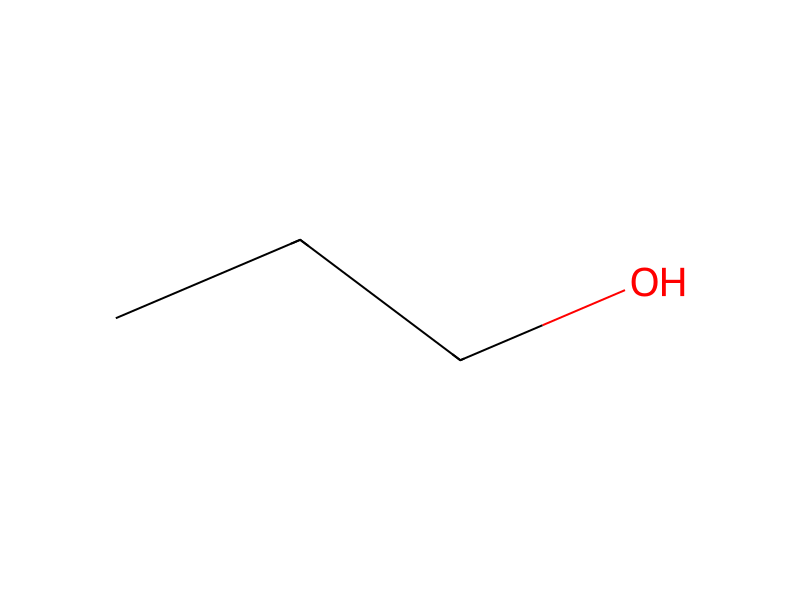
196 a) To a suspension of 8-bromo-2-chloro-[1,2,4]triazolo[1,5-a]pyridine (0.50 g, 2.2 mmol), potassium vinyltrifluoroborate (0.34 g, 2.6 mmol) and [1,1′-bis(diphenylphosphino)ferrocene]dichloropalladium(II), complex with dichloromethane (1:1) (35 mg, 0.043 mmol) in 1-propanol (10 mL) was added triethylamine (0.30 mL, 2.2 mmol). The mixture was heated at 90° C. for 6 hours under an atmosphere of nitrogen. The mixture was cooled to room temperature and the volatiles were evaporated under reduced pressure. The residue was diluted with dichloromethane (50 mL) and filtered through a plug of diatomaceous earth. The filtrate was washed with 2N Hydrochloric acid (2×10 mL) and saturated aqueous sodium chloride, dried over magnesium sulfate, filtered and evaporated. The residue was purified via chromatography (silica gel column 24 g and 0%→2% methanol: dichloromethane). 2-Chloro-8-vinyl-[1,2,4]triazolo[1,5-a]pyridine was isolated as a white solid (0.336 g, 87%). 1H NMR (400 MHz, CDCl3, δ, ppm): 8.40 (d, J=6.8 Hz, 1H), 7.53 (d, J=7.3 Hz, 1H), 7.08-6.94 (m, 2H), 6.59 (d, J=17.6 Hz, 1H), 5.70 (d, J=11.2 Hz, 1H). MS=180, 182 (MH)+. 196 b) To a suspension of N-(2-bromo-phenyl)-methanesulfonamide (5.01 g, 20.0 mmol) and cesium carbonate (7.2 g, 22 mmol) in acetonitrile (20 mL) was added iodomethane (1.4 mL, 22 mmol). The mixture was stirred at room temperature for 24 hours then diluted with dichloromethane (30 mL), filtered through a plug of diatomaceous earth and evaporated. N-(2-Bromo-phenyl)-N-methyl-methanesulfonamide was isolated as a pale orange solid (5.22 g, 98%). 1H NMR (400 MHz, CDCl3, δ, ppm): 7.65 (d, J=8.0 Hz, 1H), 7.50 (d, J=7.9 Hz, 1H), 7.37 (t, J=7.4 Hz, 1H), 7.23 (t, J=8.2 Hz, 1H), 3.29 (s, 3H), 3.06 (s, 3H). MS=286, 288 (MH)+. 196 c) A tube was charged with 2-chloro-8-vinyl-[1,2,4]triazolo[1,5-a]pyridine (100.0 mg, 0.5568 mmol), N-(2-bromo-phenyl)-N-methyl-methanesulfonamide (140.0 mg, 0.5300 mmol), palladium acetate (4.0 mg, 0.018 mmol) and tri-o-tolylphosphine (26.0 mg, 0.0854 mmol), triethylamine (0.35 mL, 2.5 mmol) and acetonitrile (1 mL) under an atmosphere of nitrogen. The tube was sealed and the mixture was heated at 100° C. for 18 hours then cooled to room temperature, diluted with dichloromethane (30 mL) and washed with 2N Hydrochloric acid (10 mL). The organic layer was separated, dried over magnesium sulfate, filtered and evaporated. The residued was purified via chromatography (silica gel column 24 g and 10%→90% ethyl acetate:hexane). N-{2-[(E)-2-(2-Chloro-[1,2,4]triazolo[1,5-a]pyridin-8-yl)-vinyl]-phenyl}-N-methyl-methanesulfonamide was isolated as a tan foam (0.133 g, 69%). 1H NMR (400 MHz, CDCl3, δ, ppm): 8.52 (d, J=16.1 Hz, 1H), 8.40 (d, J=6.8 Hz, 1H), 7.86 (d, J=7.1 Hz, 1H), 7.65 (d, J=7.4 Hz, 1H), 7.46-7.30 (m, 3H), 7.20-7.05 (m, 2H), 3.36 (s, 3H), 3.19 (s, 3H). MS=363, 365 (MH)+. 196 d) N-Methyl-N-[2-((E)-2-{2-[4-(4-methyl-piperazin-1-yl)-phenylamino]-[1,2,4]triazolo[1,5-a]pyridin-8-yl}-vinyl)-phenyl]-methanesulfonamide was prepared from N-{2[(E)-2-(2-chloro-[1,2,4]triazolo[1,5-a]pyridin-8-yl)-vinyl]-phenyl}-N-methyl-methanesulfonamide (133.0 mg, 0.3666 mmol) and 4-(4-methyl-piperazin-1-yl)-phenylamine (70.0 mg, 0.366 mmol) with 2,2′-bis-dicyclohexylphosphanyl-biphenyl (30.0 mg, 0.0549 mmol) as the ligand in a manner analogous to Example 2d. Product isolated as a yellow solid (0.055 g, 29%). 1H NMR (400 MHz, CDCl3, δ, ppm): 8.49 (d, J=16.4 Hz, 1H), 8.31 (d, J=6.3 Hz, 1H), 7.85 (d, J=7.6 Hz, 1H), 7.53-7.48 (m, 3H), 7.43-7.28 (m, 4H), 6.98 (d, J=7.8 Hz, 2H), 6.87 (t, J=6.9 Hz, 1H), 6.68 (s, 1H), 3.35 (s, 3H), 3.20-3.15 (m, 4H), 3.03 (s, 3H), 2.63-2.58 (m, 4H), 2.36 (s, 3H). MS=4518 (MH)+.