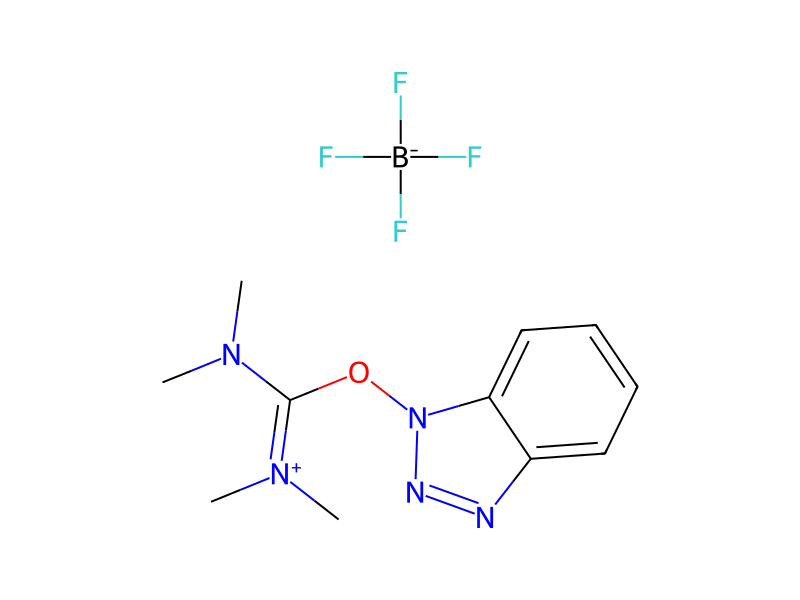
[C:1]([NH:8][C@@H:9]([C:11]([OH:13])=O)[CH3:10])([O:3][C:4]([CH3:7])([CH3:6])[CH3:5])=[O:2].F[B-](F)(F)F.N1(OC(N(C)C)=[N+](C)C)C2C=CC=CC=2N=N1.Cl.[C:37]([CH:39]1[CH2:42][NH:41][CH2:40]1)#[N:38].C(N(CC)C(C)C)(C)C>ClCCl.C(OCC)(=O)C.O>[C:4]([O:3][C:1](=[O:2])[NH:8][C@H:9]([CH3:10])[C:11]([N:41]1[CH2:42][CH:39]([C:37]#[N:38])[CH2:40]1)=[O:13])([CH3:5])([CH3:6])[CH3:7]Boc-D-alanine (1.0 g, 5.29 mmol) and O-benzotriazol-1-yl-N,N,N′,N′-tetramethyluronium tetrafluoroborate (1.87 g, 5.81 mmol) were dissolved in dichloromethane. 3-Cyanoazetidine hydrochloride (0.94 g, 7.93 mmol) and then N,N-diisopropylethylamine (2.3 mL, 13.2 mmol) were added and the mixture was stirred at room temperature for 16 h. Water and ethyl acetate were added and the layers were separated. The aqueous layer was extracted once more with ethyl acetate. The combined organic layers were washed with sodium chloride solution, dried over sodium sulfate and concentrated. The residue was purified by silica gel chromatography (ethyl acetate/hexanes) to provide 0.91 g (68%) of [(R)-2-(3-cyano-azetidin-1-yl)-1-methyl-2-oxo-ethyl]-carbamic acid tert-butyl ester.