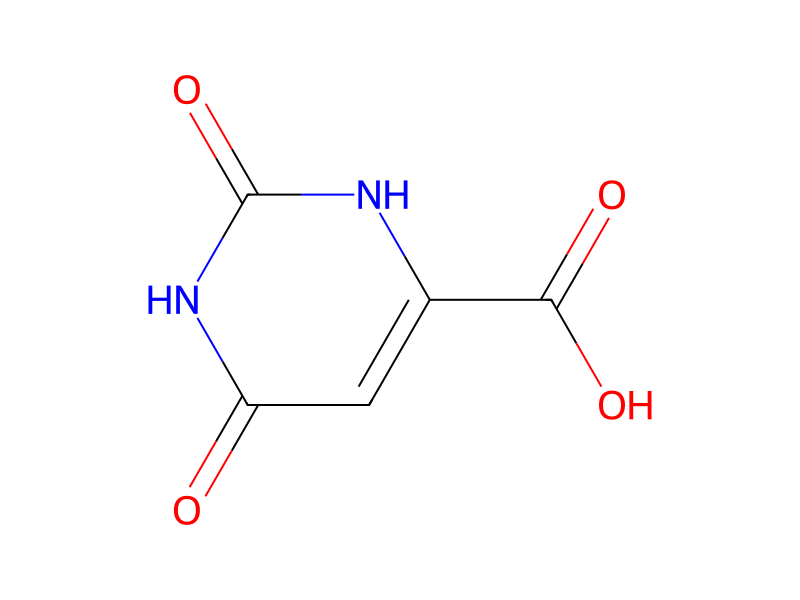
Orotic Acid → HCID 66996102、化合物
反応式

[NH:1]1[CH2:5][CH2:4][C@H:3](/[CH:6]=[CH:7]/[C:8]2[CH:9]=[N:10][CH:11]=[N:12][CH:13]=2)[CH2:2]1.[C:14]([OH:24])(=[O:23])[C:15]1[NH:22][C:20](=[O:21])[NH:19][C:17](=[O:18])[CH:16]=1>C(#N)C>[C:14]([OH:24])(=[O:23])[C:15]1[NH:22][C:20](=[O:21])[NH:19][C:17](=[O:18])[CH:16]=1.[NH:1]1[CH2:5][CH2:4][C@H:3](/[CH:6]=[CH:7]/[C:8]2[CH:13]=[N:12][CH:11]=[N:10][CH:9]=2)[CH2:2]1参加物
4



反応条件
- 温度
- 50 °C
実験手順
(R)-5-((E)-2-pyrrolidin-3-ylvinyl)pyrimidine free base (189 mg, 1.077 mmol, freshly prepared) was dissolved in acetonitrile (5 ml). The solution was then treated with 1.1 eq. of an orotic acid solution (1M in ethanol) at ambient temperature. The mixture was warmed up to 50° C. and cooled down slowly to ambient temperature overnight. The solid obtained was filtered and dried under suction before being analysed by XRPD, and 1H-NMR. The XRPD diffractogram of (R)-5-((E)-2-pyrrolidin-3-ylvinyl)pyrimidine mono-orotate Form I is shown in FIG. 6.