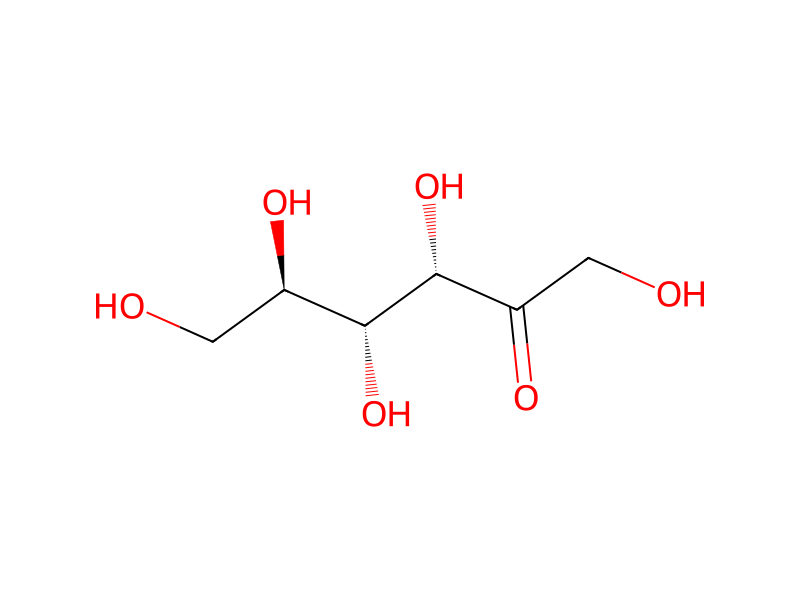
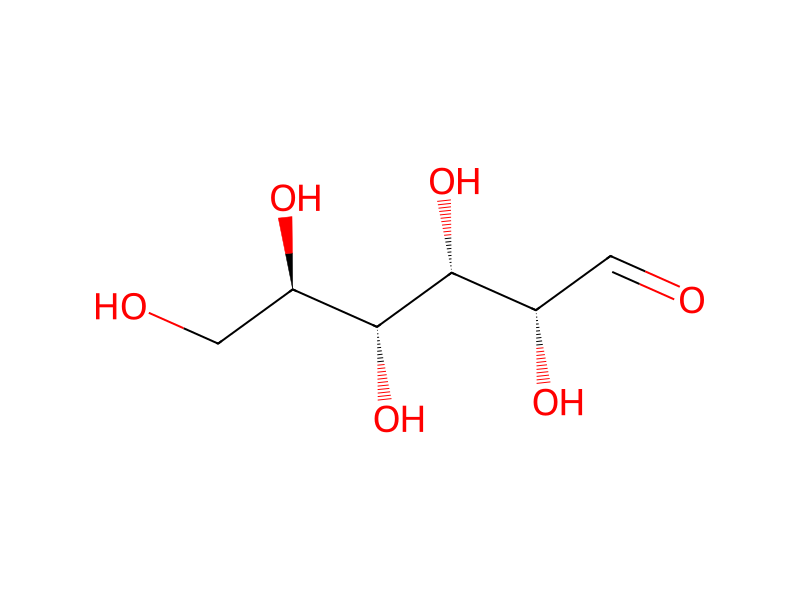
[Cl-].[Na+].[O:3]=[CH:4][C@@H:5]([C@H:7]([C@@H:9]([C@@H:11]([CH2:13][OH:14])[OH:12])[OH:10])[OH:8])[OH:6].[OH:15][CH2:16][C:17]([C@H:19]([C@@H:21]([C@@H:23]([CH2:25][OH:26])[OH:24])[OH:22])[OH:20])=[O:18].Cl>CC(CC(C)=O)C>[OH:3][CH2:4][C:5]([C@H:7]([C@@H:9]([C@@H:11]([CH2:13][OH:14])[OH:12])[OH:10])[OH:8])=[O:6].[O:15]=[CH:16][C@@H:17]([C@H:19]([C@@H:21]([C@@H:23]([CH2:25][OH:26])[OH:24])[OH:22])[OH:20])[OH:18]2.5 mL of an aqueous solution of 245 g/L sodium chloride, 171 g/L glucose, 123 g/L fructose and 0.36 g/L hydrogen chloride was added 10 mL MIBK and stirred under a nitrogen atmosphere in a 25 mL sealed glass reactor tube at 140° C. for 1 hour. The reaction mixture was cooled and the organic phase was collected. To the aqueous phase was added 10 mL MIBK and 50 μL aqueous solution of 0.5M aluminum chloride. The mixture was stirred under a nitrogen atmosphere in a 25 mL sealed glass reactor tube at 140° C. for two to four hours. The aqueous and organic phases were analyzed by HPLC. The results are given in table 1.