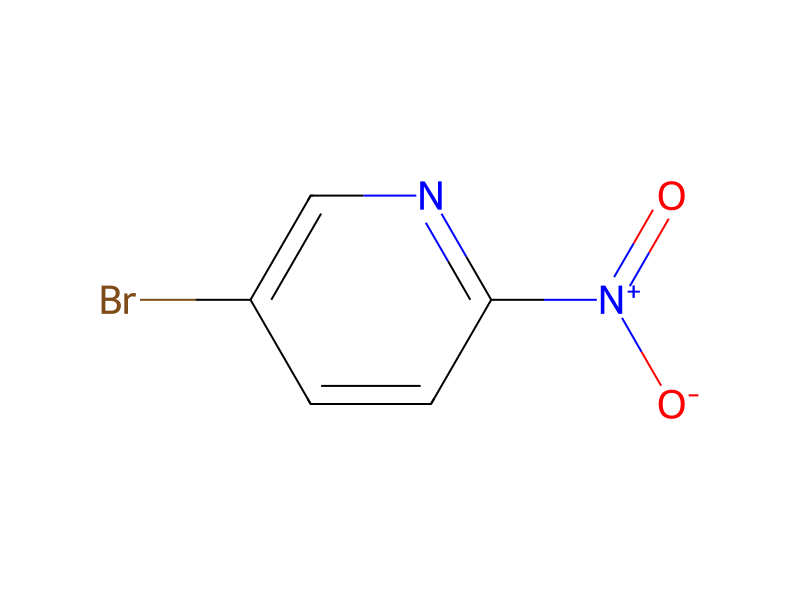
A 500-mL single-neck round-bottomed flask equipped with a magnetic stirrer and nitrogen inlet was charged with 3-methylazetidinium benzenesulfonate (4.02 g, 17.5 mmol), 2-nitro-5-bromo pyridine (3.56 g, 17.5 mmol), cesium carbonate (28.5 g, 87.7 mmol) and 1,4-dioxane (50 mL). After bubbling nitrogen through the resulting suspension for 30 min, Xantphos (862 mg, 1.50 mmol) and tris(dibenzylidene-acetone)dipalladium(0) (800 mg, 0.900 mmol) were added. A reflux condenser was attached to the flask, and the reaction mixture was heated at reflux for 3 h. After this time, the mixture was cooled to room temperature and diluted with 90:10 methylene chloride/methanol (100 mL) and water (75 mL), and the layers were separated. The aqueous layer was extracted with 90:10 methylene chloride/methanol (2×50 mL), and the combined organic extracts were washed with brine and dried over sodium sulfate. The drying agent was removed by filtration. The filtrate was concentrated under reduced pressure, and the resulting residue was purified by flash column chromatography (silica, 0% to 80% ethyl acetate/hexanes) to afford 236a in 69% yield (2.35 g) as an amorphous yellow solid: mp 141-143° C.; 1H NMR (500 MHz, CDCl3) d 8.12 (d, 1H, J=9.0 Hz), 7.60 (d, 1H, J=2.5 Hz), 6.66 (dd, 1H, J=9.0, 2.5 Hz), 4.23 (t, 2H, J=8.5 Hz), 3.68 (m, 2H), 2.99 (m, 1H), 1.36 (d, 3H, J=7.0 Hz; MS (ESI+) m/z 194.0 (M+H)