Sodium Silicate → Orthosilicic acid
反応式

[O-:1][Si:2]([O-:4])=[O:3].[Na+:5].[Na+].[O-:7][Si:8]([O-:11])([O-:10])[O-:9].[K+].[K+].[K+].[K+].[Si]([O-])([O-])([O-])[O-].[Na+].[Na+].[Na+].[Na+]>>[O-:3][Si:2]([O-:4])=[O:1].[Na+:5].[Na+:5].[Si:8]([OH:11])([OH:10])([OH:9])[OH:7]参加物


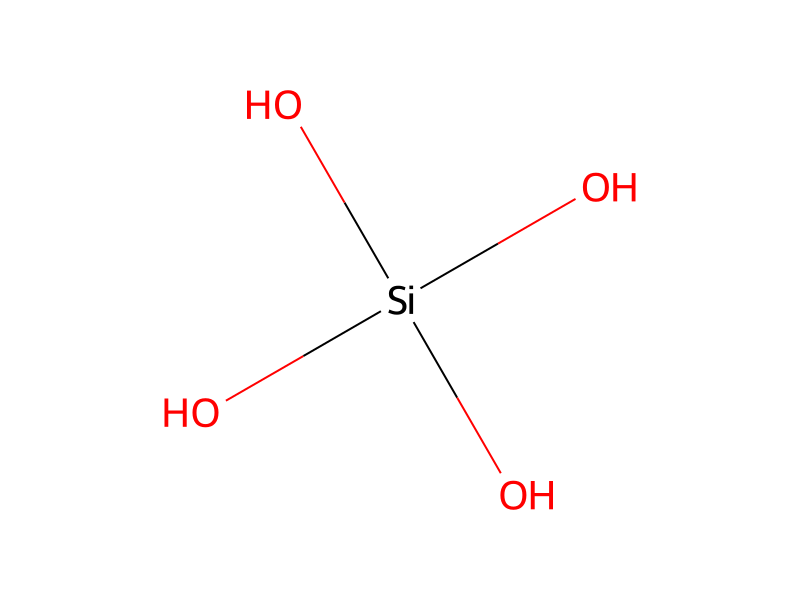
実験手順
Colloidal silica particles commonly used as polishing particles are made by a wet chemical method, which includes the steps of: preparing a dilute solution of a water glass (e.g., sodium water glass and potassium water glass, which are primarily composed of sodium silicate and potassium silicate, respectively) solution; passing the water glass solution through a cationic exchange resin to remove metallic ions, such as Na+ and K+, from the water glass solution to form an aqueous active silicic acid solution; adding a basic agent to the silicic acid solution for alkalization at appropriate temperature and pH value to conduct polycondensation of active silicic acid to form particles of colloidal silica; and ultra-filtering the particles of colloidal silica to obtain a silica sol. In consideration of safety, operating convenience, and production costs, the alkalization is usually conducted using sodium hydroxide or sodium water glass.
後処理
- customto remove metallic ions
出典と根拠
- ORDレコード
- ord-0d58c1691db14888b5e5c52e78fc443e
- 出典データセット
- uspto-grants-2012_05
- 特許番号
- US08167684B2
反応ノート
読み込み中…