反応式

[Cr:1]([O:24][Si:25]([C:38]1[CH:43]=[CH:42][CH:41]=[CH:40][CH:39]=1)([C:32]1[CH:37]=[CH:36][CH:35]=[CH:34][CH:33]=1)[C:26]1[CH:31]=[CH:30][CH:29]=[CH:28][CH:27]=1)([O:4][Si:5]([C:18]1[CH:23]=[CH:22][CH:21]=[CH:20][CH:19]=1)([C:12]1[CH:17]=[CH:16][CH:15]=[CH:14][CH:13]=1)[C:6]1[CH:11]=[CH:10][CH:9]=[CH:8][CH:7]=1)(=[O:3])=[O:2].C=C.C1([Si](C2C=CC=CC=2)(C2C=CC=CC=2)O)C=CC=CC=1.[O-2].[O-2].[O-2].[Cr+6].C1([Si](O[Si](C2C=CC=CC=2)(C2C=CC=CC=2)C2C=CC=CC=2)(C2C=CC=CC=2)C2C=CC=CC=2)C=CC=CC=1.C(Cl)(Cl)(Cl)[Cl:110]>C(O)(=O)C.C(#N)C.C(C#N)CC>[C:6]1([Si:5]([C:18]2[CH:23]=[CH:22][CH:21]=[CH:20][CH:19]=2)([C:12]2[CH:17]=[CH:16][CH:15]=[CH:14][CH:13]=2)[Cl:110])[CH:11]=[CH:10][CH:9]=[CH:8][CH:7]=1.[Cr:1]([O:24][Si:25]([C:32]1[CH:37]=[CH:36][CH:35]=[CH:34][CH:33]=1)([C:38]1[CH:39]=[CH:40][CH:41]=[CH:42][CH:43]=1)[C:26]1[CH:27]=[CH:28][CH:29]=[CH:30][CH:31]=1)([O:4][Si:5]([C:12]1[CH:17]=[CH:16][CH:15]=[CH:14][CH:13]=1)([C:18]1[CH:23]=[CH:22][CH:21]=[CH:20][CH:19]=1)[C:6]1[CH:7]=[CH:8][CH:9]=[CH:10][CH:11]=1)(=[O:3])=[O:2]参加物
反応物 6



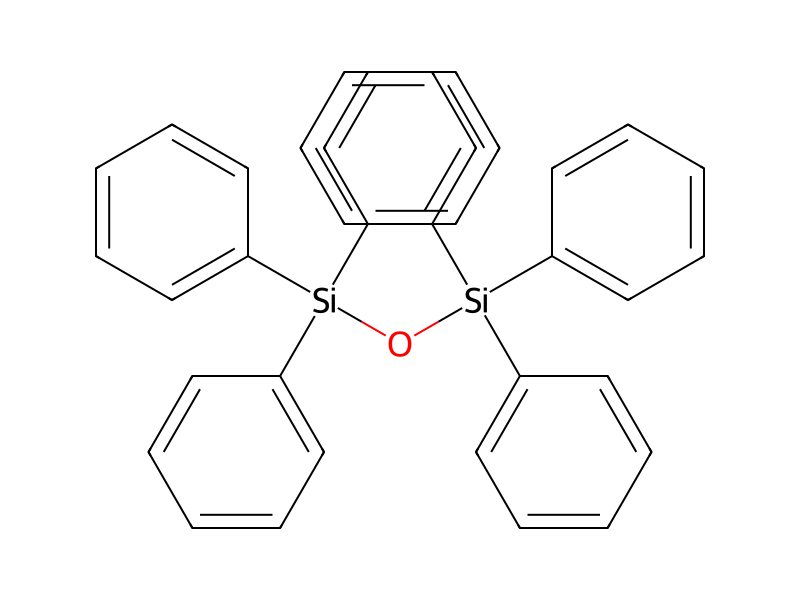


生成物 2

試薬・触媒・溶媒 3



実験手順
Bistriphenylsilyl chromate is usually used as the catalyst of unsaturated hydrocarbon compound polymerization such as ethylene polymerization. With respect to its synthesis process, early in 1958, U.S. Pat. 7,863,891 disclosed a process wherein bistriphenylsilyl chromate can be obtained with a yield of 85% by reacting triphenylsilanol and chromium trioxide in glacial acetic acid at 50° C. for 10 minutes. L. M. Bakert et al disclosed a process wherein bistriphenylsilyl chromate can be obtained with a yield of about 60% by reacting triphenylsilanol and chromium trioxide in carbon tetrachloride at room temperature for 24 hours [J. Org. Chem., Vol. 85, No. 8, pp. 774-776, March 1970]. The former Czechoslovakia Patent CS 175856 disclosed a process wherein bistriphenylsilyl chromate can be obtained with a yield of 43-71% by reacting triphenylsilanol or triphenylsilyl ether and chromium trioxide in acetonitrile or propyl cyanide. However, the starting material triphenylsilanol used in the above processes is obtained by the hydrolysis of triphenylchlorosilane, so the process for the preparation of bistriphenylsilyl chromate is relatively complicated and the yield thereof is relatively low. The former Soviet Union Patent SU 689192 .disclosed a process wherein bistriphenylsilyl chromate can be obtained with a yield of 94% by reacting triphenylchlorosilane and potassium dichromate in glacial acetic acid at 40°-50° C. for 1.5 hours. The reaction equation thereof is as follows: ##STR1##
後処理
- customWith respect to its synthesis process
- customcan be obtained with a yield of 85%
- customat 50° C.
- customfor 10 minutes
- customcan be obtained with a yield of about 60%
- customat room temperature
- customfor 24 hours
- customcan be obtained with a yield of 43-71%
出典と根拠
- ORDレコード
- ord-8970a1da8b70416caac798b0fa5410c7
- 出典データセット
- uspto-grants-1997_12
- 特許番号
- US05698723
関連ノート
読み込み中…