反応式
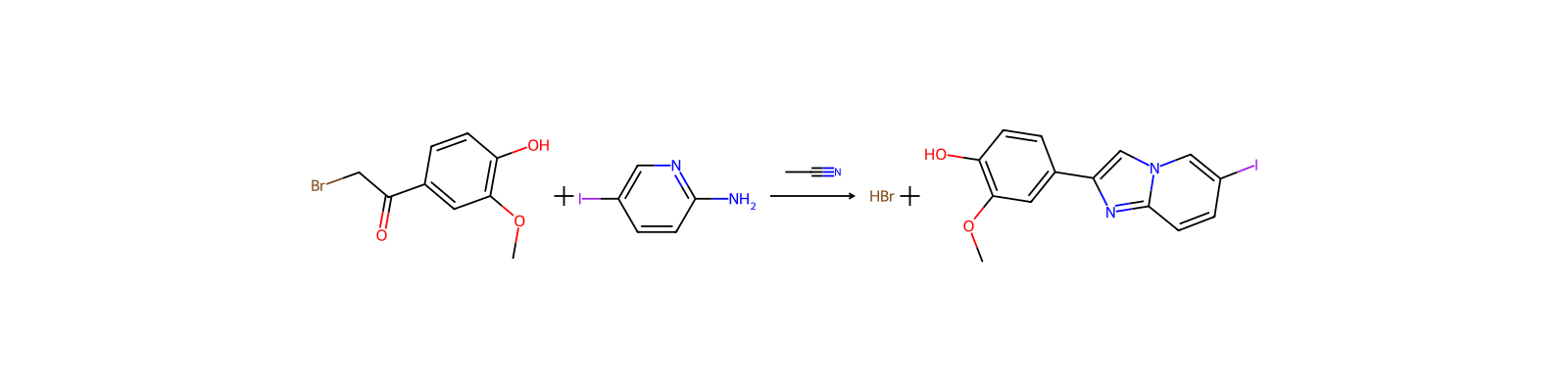
[Br:1][CH2:2][C:3]([C:5]1[CH:10]=[CH:9][C:8]([OH:11])=[C:7]([O:12][CH3:13])[CH:6]=1)=O.[NH2:14][C:15]1[CH:20]=[CH:19][C:18]([I:21])=[CH:17][N:16]=1>C(#N)C>[BrH:1].[OH:11][C:8]1[CH:9]=[CH:10][C:5]([C:3]2[N:14]=[C:15]3[CH:20]=[CH:19][C:18]([I:21])=[CH:17][N:16]3[CH:2]=2)=[CH:6][C:7]=1[O:12][CH3:13]参加物



実験手順
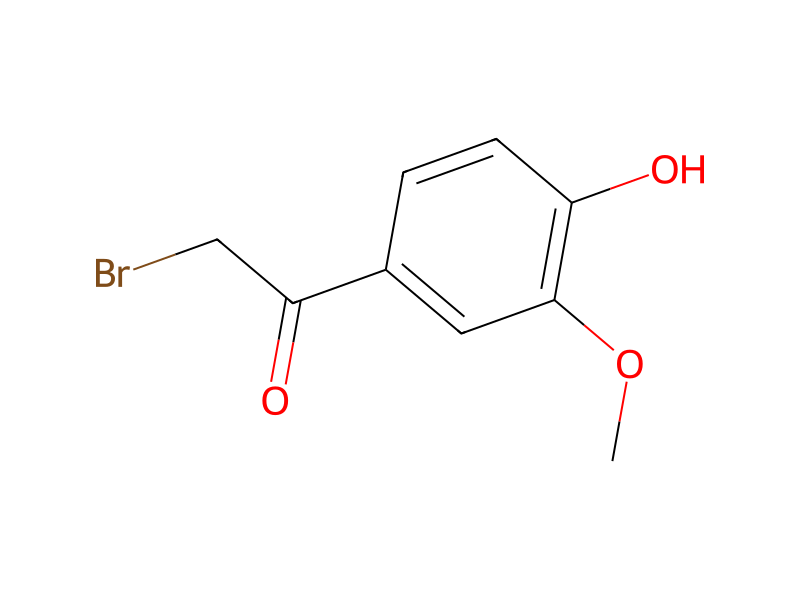
First, 2-bromo-4′-hydroxy-3′-methoxyacetophenone and 2-amino-5-iodopyridine are dissolved in an inactive solvent such as acetonitrile, and are allowed to react with each other at a reflux temperature for 2 to 6 hours to produce 2-(4′-hydroxy-3′-methoxyphenyl)-6-iodoimidazo[1,2-a]pyridine hydrobromide salt as white precipitates. The solvent used in this instance may be acetonitrile or another solvent that is usually employed in a similar reaction, for example, methanol and acetone. The reaction temperature may be a temperature allowing refluxing, for example, 110° C. when the solvent is acetonitrile. The amount of the solvent to be used may be an amount sufficient to effect the reaction, however, it should be noted that if the solvent is too much, it will become difficult to obtain precipitates of reaction products. For example, when 2-bromo-4′-hydroxy-3′-methoxyacetophenone in an amount corresponding to 2 mmol is used for the reaction, the amount of a solvent to be used can be about 15 to 30 mL.
後処理
- customto react with each other at a reflux temperature for 2 to 6 hours
出典と根拠
- ORDレコード
- ord-be4bb38fcbb84033ad4506e283d659ad
- 出典データセット
- uspto-grants-2013_03
- 特許番号
- US08399672B2
関連ノート
読み込み中…