ホームMCPワークベンチSkills
ホームワークベンチ通知マイページ
llms.txt · MCPガイドプライバシーポリシー · 利用規約 · サポートv1.8.3
  1. ホーム
  2. /反応

Hydrochloric Acid → 7-Bromo-2,3-dihydro-1H-pyrrolo[1,2-a]indol-1-one

HRID 1964073
印刷

反応式

HRID 1964073 の反応式
[Br:1][C:2]1[CH:3]=[C:4]2[C:8](=[CH:9][CH:10]=1)[NH:7][C:6]([C:11]([O:13]CC)=O)=[CH:5]2.[H-].[Na+].[C:18](OCCCC)(=O)[CH:19]=C.Cl>C1(C)C=CC=CC=1>[Br:1][C:2]1[CH:10]=[CH:9][C:8]2[N:7]3[CH2:18][CH2:19][C:11](=[O:13])[C:6]3=[CH:5][C:4]=2[CH:3]=1
参加物反応条件実験手順後処理出典と根拠反応ノート

参加物

6

反応物 4

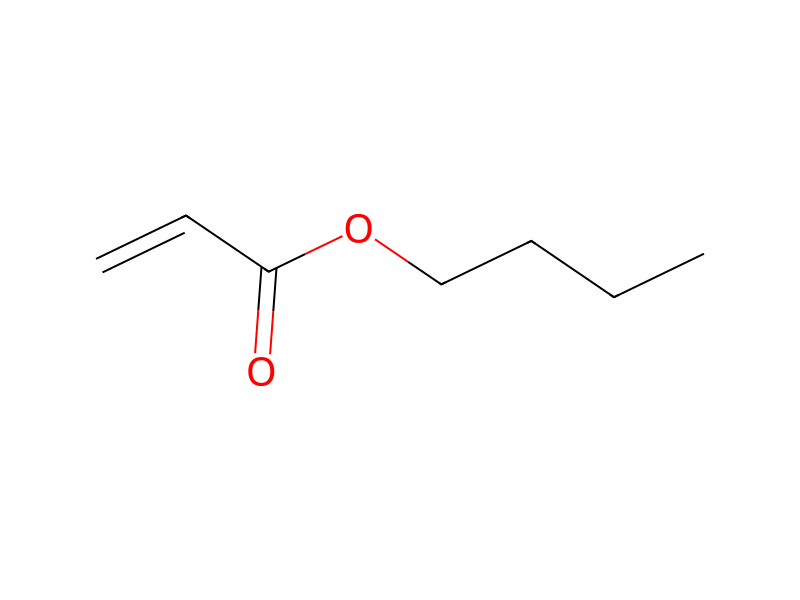
HCID 313Hydrochloric AcidHCID 8846Butyl Acrylate4 回HCID 24758Sodium hydride2 回HCID 259091Ethyl 5-Bromoindole-2-carboxylate

生成物 1

HCID 582215357-Bromo-2,3-dihydro-1H-pyrrolo[1,2-a]indol-1-one

試薬・触媒・溶媒 1

HCID 1140Toluene
溶媒

反応条件

温度
110 °C

実験手順

To a solution of ethyl 5-bromo-1H-indole-2-carboxylate (30 g, 112 mmol) in toluene (500 mL) was added portionwise sodium hydride (60% dispersion in mineral oil, 9.40 g, 235 mmol). Vigorous gas evolution was observed. The resulting white suspension was heated to 110° C. Butyl acrylate (35.1 mL, 246 mmol) was added dropwise (using a syring pump) over 24 h while stirring vigorously at an internal temperature of 110° C. Additional butyl acrylate (10 mL) was added in one portion and stirring was continued at 110° C. for 4 h followed by additional sodium hydride (60% dispersion in mineral oil, 5 g) and butyl acrylate (10 mL). 4 h later, butyl acrylate (6 mL) was added. Stirring was continued at 110° C. for a total of 48 h. The reaction was cooled in an ice-bath and 2 M HCl (400 mL) was added carefully. The layers were separated and the aqueous layer was extracted with dichloromethane (2×200 mL). The combined organic extracts were washed with brine, dried over MgSO4, filtered and concentrated. The resulting orange residue was dissolved in acetic acid (900 mL) and water (100 mL). The orange solution was refluxed 16 h before the solvents were removed under vacuum. To the residue was added dichloromethane (300 mL). The resulting precipitate was collected by filtration and rinsed twice with dichloromethane to provide the title compound. LCMS m/z=250.2 [M+H]+; 1H NMR (400 MHz, DMSO-d6) δ ppm 3.20 (t, J=6.1 Hz, 2H), 4.46 (t, J=6.1 Hz, 2H), 6.92 (s, 1H), 7.46 (dd, J=8.8, 1.8 Hz, 1H), 7.63 (d, J=8.8 Hz, 1H), 7.98 (d, J=2.0 Hz, 1H).


後処理

  1. customover 24 h
  2. stirringstirring
  3. stirringStirring
  4. customwas continued at 110° C. for a total of 48 h
  5. temperatureThe reaction was cooled in an ice-bath
  6. customThe layers were separated
  7. extractionthe aqueous layer was extracted with dichloromethane (2×200 mL)
  8. washThe combined organic extracts were washed with brine
  9. dry with materialdried over MgSO4
  10. filtrationfiltered
  11. concentrationconcentrated
  12. dissolutionThe resulting orange residue was dissolved in acetic acid (900 mL)
  13. temperatureThe orange solution was refluxed 16 h before the solvents
  14. customwere removed under vacuum
  15. additionTo the residue was added dichloromethane (300 mL)
  16. filtrationThe resulting precipitate was collected by filtration
  17. washrinsed twice with dichloromethane

出典と根拠

ORDレコード
ord-0239e22676fc4b8e8488a71bb461ef88
出典データセット
uspto-grants-2013_04
DOI
10.6084/m9.figshare.5104873.v1
特許番号
US08415484B2

反応ノート

このページの内容参加物反応条件実験手順後処理出典と根拠反応ノート