反応式

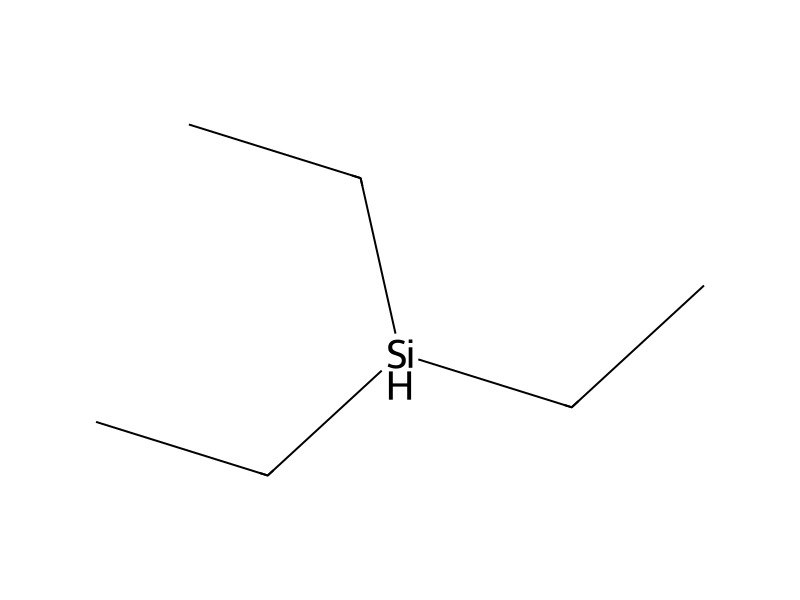
[Br:1][C:2]1[CH:10]=[CH:9][CH:8]=[C:7]2[C:3]=1[C:4]1([C:36]3[C:27](=[CH:28][C:29]4[O:34][CH2:33][CH2:32][O:31][C:30]=4[CH:35]=3)[O:26][CH2:25]1)[C:5](=[O:24])[N:6]2C(C1C=CC=CC=1)C1C=CC=CC=1.C([SiH](CC)CC)C.FC(F)(F)C(O)=O>>[Br:1][C:2]1[CH:10]=[CH:9][CH:8]=[C:7]2[C:3]=1[C:4]1([C:36]3[C:27](=[CH:28][C:29]4[O:34][CH2:33][CH2:32][O:31][C:30]=4[CH:35]=3)[O:26][CH2:25]1)[C:5](=[O:24])[NH:6]2参加物



反応条件
- 温度
- 75 °C
実験手順
A mixture of 4′-bromo-1′-(diphenylmethyl)-2,3-dihydrospiro[furo[2,3-g][1,4]benzodioxine-8,3′-indol]-2′(1H)-one (5.38 g, 9.96 mmol), triethylsilane (7.93 mL, 49.8 mmol) and trifluoroacetic acid (25.9 mL, 348 mmol) was heated at 75° C. for 8 h. The reaction mixture was allowed to cool to ambient temperature, concentrated in vacuo. The residue was triturated in diethyl ether, purified by column chromatography and eluted with a 0% to 25% gradient of ethyl acetate in dichloromethane to afford 4′-bromo-2,3-dihydrospiro[furo[2,3-g][1,4]benzodioxine-8,3′-indol]-2′(1′H)-one (1.79 g, 48%) as a colorless solid: mp>250° C.; 1H NMR (300 MHz, DMSO-d6) δ 10.89 (s, 1H), 7.27 (dd, J=7.9, 7.9 Hz, 1H), 7.14 (d, J=7.8 Hz, 1H), 6.94 (d, J=7.6 Hz, 1H), 6.53 (s, 1H), 5.98 (s, 1H), 5.63 (ABq, 2H), 4.20-4.12 (m, 4H); 13C NMR (75 MHz, DMSO-d6) δ 176.3, 148.7, 145.1, 144.3, 139.1, 133.0, 128.7, 126.8, 120.0, 112.6, 112.2, 110.2, 105.4, 87.7, 77.6, 64.7, 64.3; MS (ES+) m/z 359.6 (M+1), 361.6 (M+1).
後処理
- temperatureto cool to ambient temperature
- concentrationconcentrated in vacuo
- customThe residue was triturated in diethyl ether
- custompurified by column chromatography
- washeluted with a 0% to 25% gradient of ethyl acetate in dichloromethane
出典と根拠
- ORDレコード
- ord-2099d1e8cdf54db98bc349cca5b20133
- 出典データセット
- uspto-grants-2013_04
- 特許番号
- US08415370B2
関連ノート
読み込み中…