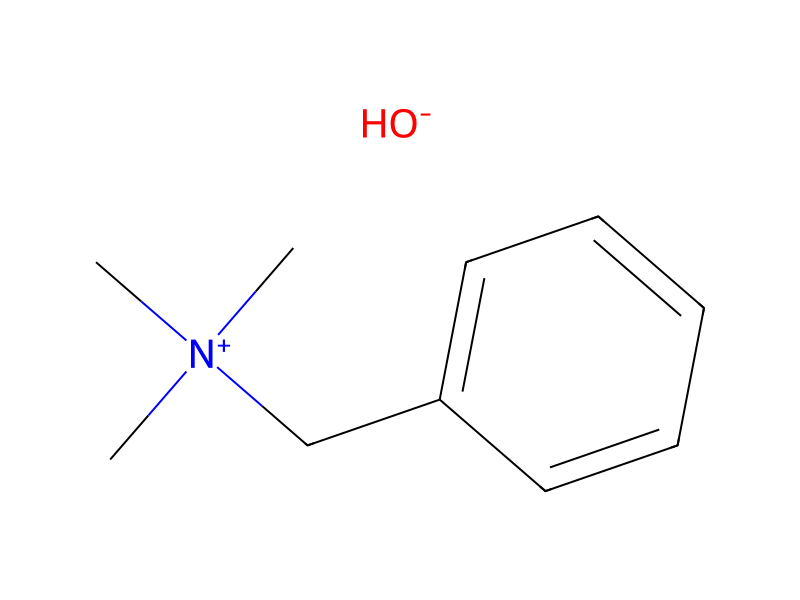
Benzyltrimethylammonium hydroxide → trans-6-Cyano-4-(1,2-dihydro-4-fluoro-2-oxopyrid-1-yl)-2,2-dimethylchroman-3-ol
反応式

[C:1]([C:3]1[CH:4]=[C:5]2[C:10](=[CH:11][CH:12]=1)[O:9][C:8]([CH3:14])([CH3:13])[CH:7]1[O:15][CH:6]21)#[N:2].[F:16][C:17]1[CH:22]=[CH:21][NH:20][C:19](=[O:23])[CH:18]=1.[OH-].C([N+](C)(C)C)C1C=CC=CC=1>O1CCCC1>[C:1]([C:3]1[CH:4]=[C:5]2[C:10](=[CH:11][CH:12]=1)[O:9][C:8]([CH3:14])([CH3:13])[C@@H:7]([OH:15])[C@@H:6]2[N:20]1[CH:21]=[CH:22][C:17]([F:16])=[CH:18][C:19]1=[O:23])#[N:2]参加物
5



実験手順
A mixture containing 460 mg of 6-cyano-2,2-dimethyl-3,4-epoxychromane, 283 mg of 4-fluoropyrid-2-one (PREPARATION III) and 0.05 ml of a methanolic solution containing 35% of benzyltrimethylammonium hydroxide, in 5 ml of tetrahydrofuran, is refluxed for 24 hours. The solvent is concentrated, the residue is taken up in ethyl acetate and the organic phase is then washed with water, dried over sodium sulfate and concentrated under vacuum. The residue obtained is chromatographed on silica using a methylene chloride/methanol mixture (97/3) as the eluent. 200 ml of a white solid are recovered.