Ytterbium triflate → HCID 68979684、化合物
HRID 2035421
反応式

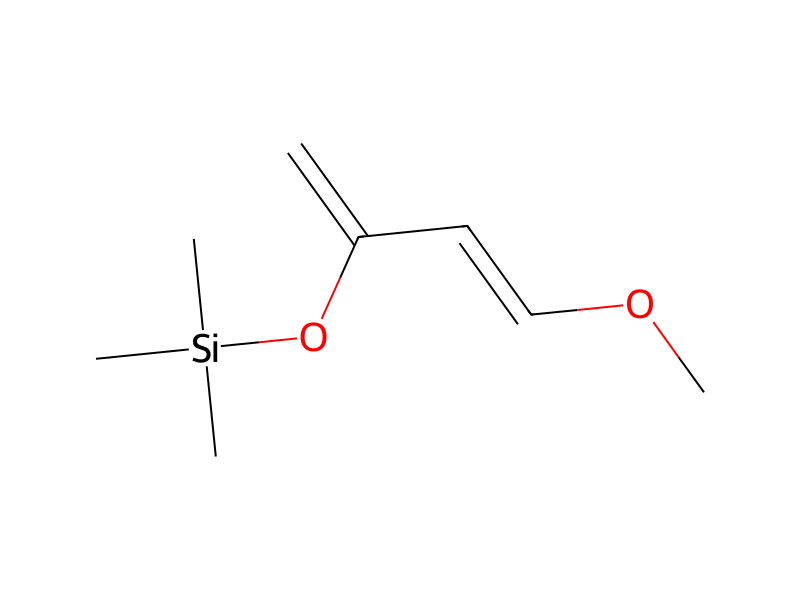
[Br:1][C:2]1[CH:17]=[CH:16][C:5]2[N:6]=[CH:7][C:8]3[CH:15]=[CH:14][CH:13]=[CH:12][C:9]=3[CH:10]([CH3:11])[C:4]=2[CH:3]=1.[O-]S(C(F)(F)F)(=O)=O.[Yb+3].[O-]S(C(F)(F)F)(=O)=O.[O-]S(C(F)(F)F)(=O)=O.CO/[CH:45]=[CH:46]/[C:47]([O:49][Si](C)(C)C)=[CH2:48]>>[Br:1][C:2]1[CH:17]=[CH:16][C:5]2[N:6]3[CH:45]=[CH:46][C:47](=[O:49])[CH2:48][CH:7]3[C:8]3[CH:15]=[CH:14][CH:13]=[CH:12][C:9]=3[CH:10]([CH3:11])[C:4]=2[CH:3]=1参加物
4



実験手順
To a stirred solution of 2-bromo-11-methyl-11H-dibenzo[b,e]azepine (5R8═Br; 666 mg, 2.33 mmol) ytterbium (III)triflate (146 mg, 0.23 mmol) was added. After stirring for 10 min. at room temperature Danishefsky's diene (0.89 mL, 4.66 mmol) was added. The reaction mixture was allowed to stand overnight at room temperature. The reaction mixture was quenched with aqueous NaHCO3, extracted into ethyl acetate, washed with brine, dried (Na2SO4) and concentrated under reduced pressure. The crude product was purified by column chromatography on silica to give 8-bromo-10,14b-dihydro-10-methyl-dibenzo[c,f]pyrido[1,2-a]azepin-2(1H)-one (6, R8═Br; 338 mg, 41%). Data: (m/z)=354/356 (M+H)+.