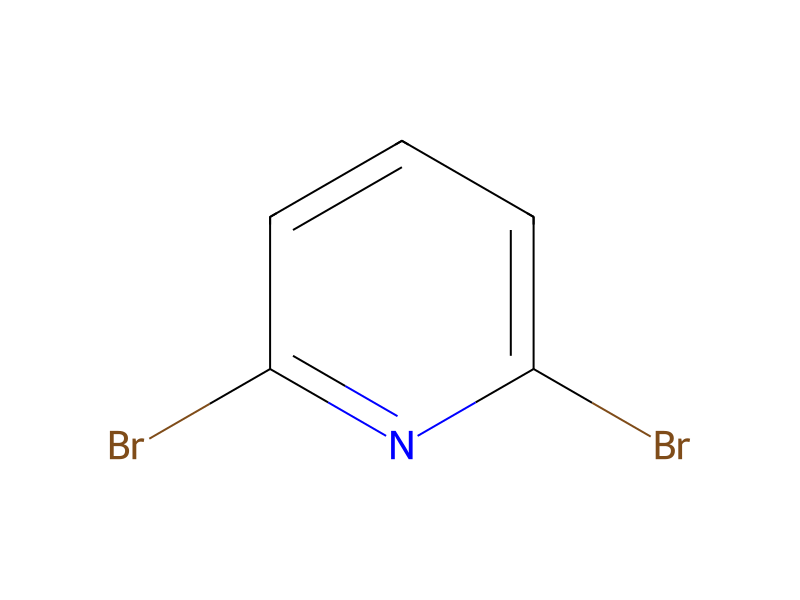
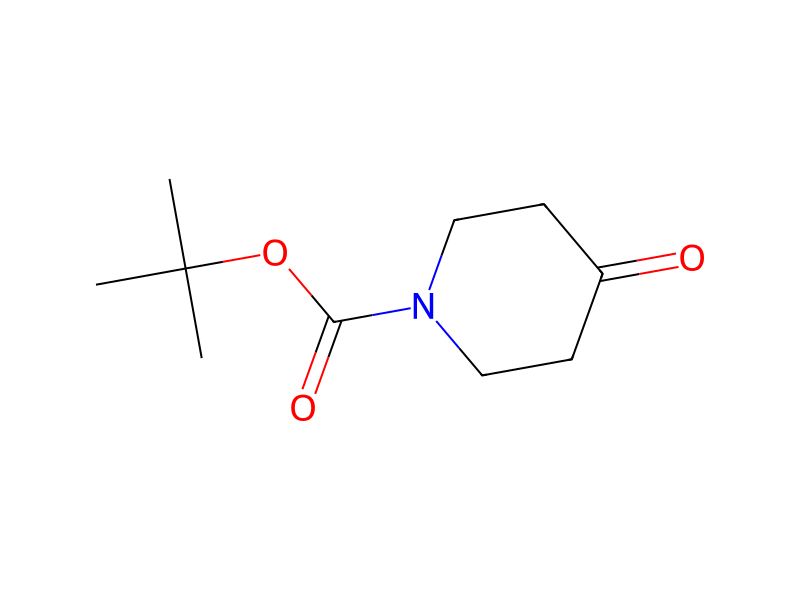
2,6-Dibromopyridine → tert-Butyl 4-(6-bromopyridin-2-yl)-4-hydroxypiperidine-1-carboxylate
反応式

Br[C:2]1[CH:7]=[CH:6][CH:5]=[C:4]([Br:8])[N:3]=1.C([Li])CCC.[C:14]([O:18][C:19]([N:21]1[CH2:26][CH2:25][C:24](=[O:27])[CH2:23][CH2:22]1)=[O:20])([CH3:17])([CH3:16])[CH3:15].[Cl-].[NH4+]>ClCCl>[C:14]([O:18][C:19]([N:21]1[CH2:26][CH2:25][C:24]([OH:27])([C:2]2[CH:7]=[CH:6][CH:5]=[C:4]([Br:8])[N:3]=2)[CH2:23][CH2:22]1)=[O:20])([CH3:17])([CH3:15])[CH3:16]参加物




実験手順
As shown in FIG. 7—step i, to a solution of 2,6-dibromopyridine (4.738 g) in dichloromethane (80 mL) was added dropwise n-butyllithium (2.5 N, 8.9 mL) at or below −65° C., followed by stirring at this temperature for 20 min. 4-Oxo-piperidine-1-carboxylic acid tert-butyl ester (compound 1030) (4.38 g) was added. After 15 min, the temperature was brought up to −30° C. and a saturated aqueous ammonium chloride solution (100 mL) was added. The organic and aqueous layers were separated, the aqueous layer extracted with dichloromethane (2×80 mL). The combined organics were evaporated to gave a residue which was triturated with hexane to give 6-bromo-4′-hydroxy-3′,4′,5′,6′-tetrahydro-2′H-[2,4′]bipyridinyl-1′-carboxylic acid tert-butyl ester (compound 1031) as a white solid (7.05 g).
後処理
- waitAfter 15 min
- customwas brought up to −30° C.
- customThe organic and aqueous layers were separated
- extractionthe aqueous layer extracted with dichloromethane (2×80 mL)
- customThe combined organics were evaporated
- customto gave a residue which
- customwas triturated with hexane
出典と根拠
- ORDレコード
- ord-d91c675f6c1e4ac18b5423fedf646004
- 出典データセット
- uspto-grants-2013_11
- 特許番号
- US08580802B2
反応ノート
読み込み中…