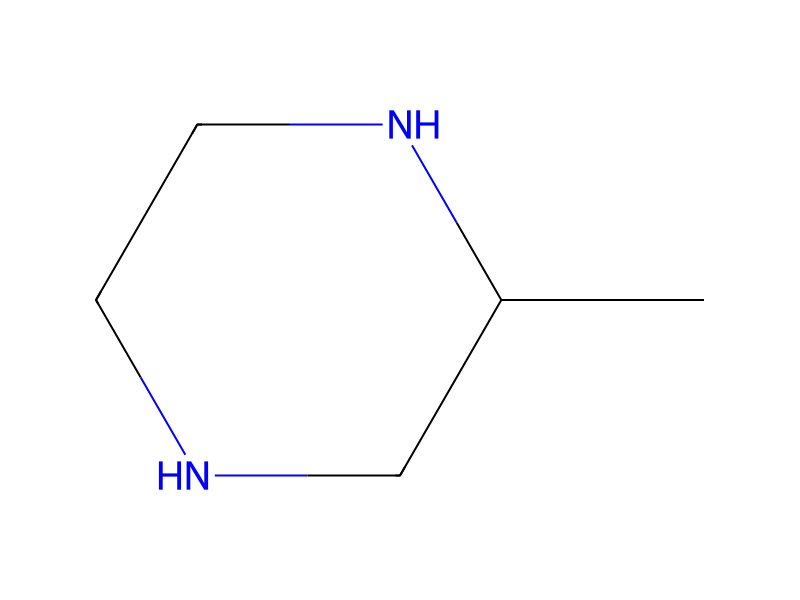
2-Methylpiperazine → 5-Benzylamino-1-cyclopropyl-6-fluoro-7-(3-methyl-1-piperazinyl)-1,4-dihydro-4-oxoquinoline-3-carboxylic acid
HRID 2050634
反応式

[CH2:1]([NH:8][C:9]1[C:18]([F:19])=[C:17](F)[CH:16]=[C:15]2[C:10]=1[C:11](=[O:27])[C:12]([C:24]([OH:26])=[O:25])=[CH:13][N:14]2[CH:21]1[CH2:23][CH2:22]1)[C:2]1[CH:7]=[CH:6][CH:5]=[CH:4][CH:3]=1.[CH3:28][CH:29]1[CH2:34][NH:33][CH2:32][CH2:31][NH:30]1>N1C=CC=CC=1>[CH2:1]([NH:8][C:9]1[C:18]([F:19])=[C:17]([N:33]2[CH2:32][CH2:31][NH:30][CH:29]([CH3:28])[CH2:34]2)[CH:16]=[C:15]2[C:10]=1[C:11](=[O:27])[C:12]([C:24]([OH:26])=[O:25])=[CH:13][N:14]2[CH:21]1[CH2:23][CH2:22]1)[C:2]1[CH:3]=[CH:4][CH:5]=[CH:6][CH:7]=1参加物
4



実験手順
A mixture of 3.0 g of 5-benzylamino-1-cyclopropyl-6,7-difluoro-1,4-dihydro-4-oxoquinoline-3-carboxylic acid, 2.5 g of 2-methylpiperazine and 30 ml of pyridine was heated under reflux for 5 hours. The reaction mixture was concentrated under reduced pressure. Water was added to the residue, and the solution was acidified with acetic acid and treated with activated charcoal. It was then neutralized with aqueous ammonia. The crystals which precipitated were collected by filtration to give 2.9 g of 5-benzylamino-1-cyclopropyl-6-fluoro-7-(3-methyl-1-piperazinyl)-1,4-dihydro-4-oxoquinoline-3-carboxylic acid. m.p. 129°-130° C.