Sodium Azide → 2-(1-azido-2-methyl-propyl)-3-benzyl-3H-pteridin-4-one
HRID 2055662
反応式

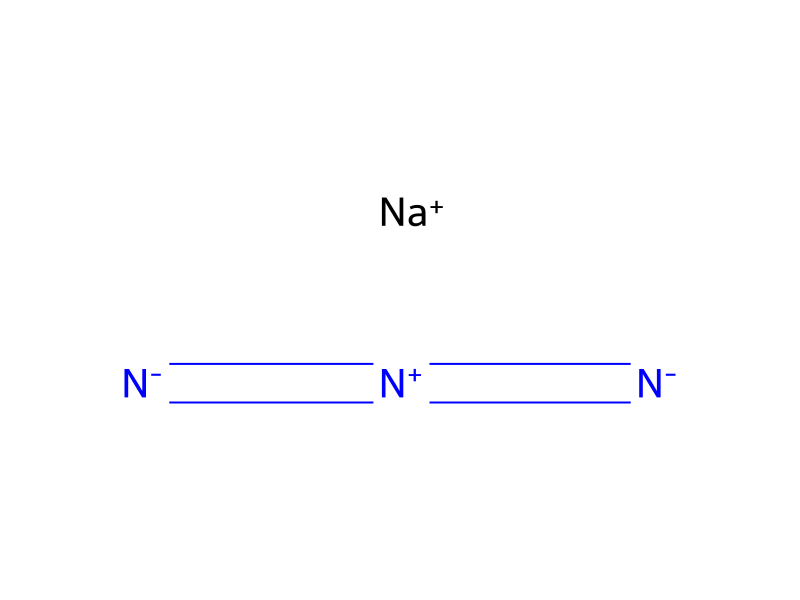
[CH2:1]([N:8]1[C:17](=[O:18])[C:16]2[C:11](=[N:12][CH:13]=[CH:14][N:15]=2)[N:10]=[C:9]1[CH:19](Br)[CH:20]([CH3:22])[CH3:21])[C:2]1[CH:7]=[CH:6][CH:5]=[CH:4][CH:3]=1.[N-:24]=[N+:25]=[N-:26].[Na+]>CN(C=O)C>[N:24]([CH:19]([C:9]1[N:8]([CH2:1][C:2]2[CH:7]=[CH:6][CH:5]=[CH:4][CH:3]=2)[C:17](=[O:18])[C:16]2[C:11](=[N:12][CH:13]=[CH:14][N:15]=2)[N:10]=1)[CH:20]([CH3:22])[CH3:21])=[N+:25]=[N-:26]参加物
4



実験手順
Formula 106 where R2 and R3 are H; R5 is Benzyl: R6 is Isopropyl; R6′ is H; X and Y are —C═; and W and Z are —N═: A DMF (50 mL) solution of 3-benzyl-2-(1-bromo-2-methyl-propyl)-3H-pteridin-4-one (1.4 g, 3.75 mmol) and sodium azide (0.488 g, 7.50 mmol) was stirred at 60° C. for two hours and concentrated under reduced pressure. The residue was dissolved in dichloromethane, washed with water and brine, dried over sodium sulfate and concentrated in vacuo to give desired azido product of Formula 106, 2-(1-azido-2-methyl-propyl)-3-benzyl-3H-pteridin-4-one, which was taken on without further purification. MS (Cl) M/E: 336.1.