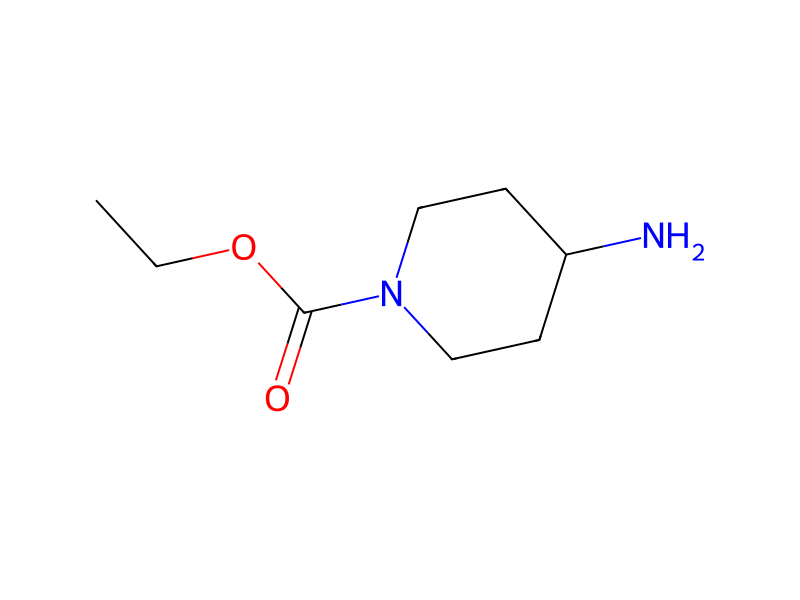
[CH2:1]([O:3][C:4]([N:6]1[CH2:11][CH2:10][CH:9]([NH2:12])[CH2:8][CH2:7]1)=[O:5])[CH3:2].Cl[C:14]1[CH:19]=[C:18]([Cl:20])[CH:17]=[CH:16][C:15]=1[N+:21]([O-:23])=[O:22].C(=O)([O-])[O-].[Na+].[Na+]>CN(C)C=O.O.C(OCC)(=O)C.[I-].[K+]>[Cl:20][C:18]1[CH:17]=[CH:16][C:15]([N+:21]([O-:23])=[O:22])=[C:14]([NH:12][CH:9]2[CH2:8][CH2:7][N:6]([C:4]([O:3][CH2:1][CH3:2])=[O:5])[CH2:11][CH2:10]2)[CH:19]=1Ethyl-4-amino-1-piperidine-carboxylate (29.6 g, 0.17 mol) was added to a stirred suspension of 2,4-dichloronitrobenzene (30.0 g, 0.16 mol), sodium carbonate (16.5 g, 0.16 mol) and potassium iodide (0.26 g, 0.0016 mol) in dimethylformamide (300 mL). The mixture was heated to 140° C., stirred for 15 hours and then allowed to cool. The reaction mixture was diluted with water (400 mL) and ethyl acetate (600 mL). The aqueous phase was separated and the organic phase was extracted with water (2×300 mL). The organic phase was dried over MgSO4 and evaporated under reduced pressure. The residue was purified by column chromatography on silica, eluting with ethyl acetate/hexane (1:3) to give the title compound (33.0 g, 65% yield) as an orange solid. (Rf: 0.4 (ethyl acetate/hexane 1:3))