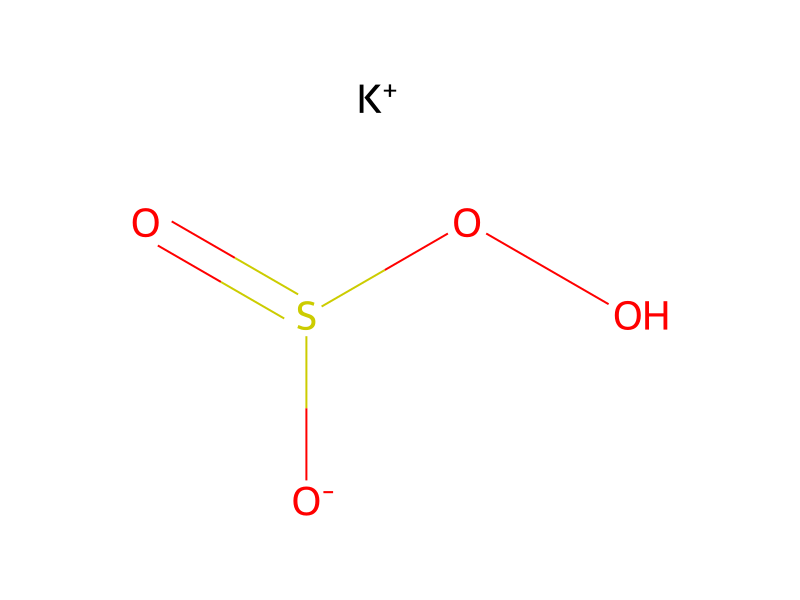
[Br:1][C:2]1[CH:7]=[CH:6][C:5](S)=[C:4]([O:9][C:10]([F:13])([F:12])[F:11])[CH:3]=1.IC.[C:16](=O)([O-])[O-].[K+].[K+].BrC1C=CC(SC)=C(OC(F)(F)F)C=1.O[O:37][S:38]([O-:40])=O.[K+]>CC(C)=O>[Br:1][C:2]1[CH:7]=[CH:6][C:5]([S:38]([CH3:16])(=[O:40])=[O:37])=[C:4]([O:9][C:10]([F:13])([F:12])[F:11])[CH:3]=1Following the method of example 9a, reaction of 4-bromo-2-trifluoromethoxy-benzenethiol (1.0 g, 3.48 mmol) with iodomethane (0.238 mL, 3.82 mmol) and potassium carbonate (0.528 g, 3.82 mmol) in 13 mL acetone, followed by oxidation as described in example 39c, using 4-bromo-1-methylsulfanyl-2-trifluoromethoxy-benzene (0.78 g, 2.72 mmol) and oxone® (2.17 g, 3.54 mmol), stirring over night at r.t., addition of oxone® (0.84 g, 1.37 mmol), stirring over night at r.t., addition of oxone® (0.84 g, 1.37 mmol) and stirring over three days at r.t. affords the title compound without further chromatography as a white solid (0.81 g). MS (m/e): 320 (M+H).